








The UEFA Nations League is Europe’s national-team league: 54 countries split into tiers by strength, playing competitive games instead of friendlies, with promotion, relegation and a trophy at the end. The 2026-27 edition kicked off on September 24, 2026, and it also feeds into qualifying for EURO 2028. Here is how it works, when the games are, and how coaches and players can use these matches to study different styles of play.
How the 2026-27 Nations League Format Works
The 54 UEFA nations are divided into four leagues based on ranking:
- League A: 16 teams in four groups of four. This is the top tier, featuring nations such as Spain, England, France, Portugal, Germany and Italy.
- League B: 16 teams in four groups of four.
- League C: 16 teams in four groups of four.
- League D: 6 teams in two groups of three.
Teams in Leagues A, B and C play six group games (home and away against each opponent), while League D teams play four, according to UEFA’s fixture list. Portugal are the defending champions after beating Spain on penalties in the 2025 final.
This is also the last edition with four leagues. From 2028-29, the competition is due to shrink to three leagues of 18 teams each, so UEFA has rebalanced promotion and relegation this time to make that transition work.
League A groups
- Group A1: Belgium, France, Türkiye, Italy
- Group A2: Greece, Germany, Netherlands, Serbia
- Group A3: Spain, Croatia, England, Czechia
- Group A4: Norway, Portugal, Denmark, Wales
2026-27 Nations League Schedule
The league phase runs from September to November 2026, with four matchdays squeezed into the new combined September-October international window:
- Matchday 1: September 24-26, 2026
- Matchday 2: September 27-29, 2026
- Matchday 3: October 1-3, 2026
- Matchday 4: October 4-6, 2026
- Matchday 5: November 12-14, 2026
- Matchday 6: November 15-17, 2026
After the group stage, League A quarter-finals and the promotion/relegation play-offs are scheduled for March 25-30, 2027, with the Nations League Finals (semi-finals, third-place game and final) set for June 9-13, 2027. UEFA has said the Finals will preferably be hosted by one of the qualified teams.
Promotion and Relegation Explained
In League A, the top two teams in each group advance to two-legged quarter-finals in March 2027. At the bottom, some last-placed teams drop straight to League B, while others, along with some third-placed teams, go into play-offs against League B runners-up to decide who plays in the top tier next time.
In Leagues B, C and D, group winners earn promotion, with play-offs deciding further places. Because of the 2028-29 restructure, the exact numbers differ from previous editions, so check UEFA’s standings page as the groups finish in November.
How the Nations League Links to EURO 2028
EURO 2028 will be played from June 9 to July 9, 2028, in the United Kingdom and Republic of Ireland, with 24 teams. Main qualifying runs from March to November 2027, with 12 groups and the draw set for December 6, 2026, in Belfast, according to UEFA.
The Nations League acts as a safety net. Group winners qualify directly, while some runners-up go into play-offs in March 2028, where places are linked to Nations League performance. That gives smaller nations a real reason to treat these games seriously.
Why the Nations League Matters
Before the Nations League, the autumn international windows were full of friendlies that coaches used to experiment. Now most games carry stakes: rankings, promotion, a trophy and a path to EURO 2028. For fans, that means more competitive matches between evenly matched teams. For players, it means meaningful minutes against opponents of a similar level.
How to Use International Games to Study Playing Styles
National teams are great for study because each country tends to have a recognizable identity, built by its coaching culture. Our guide to each country’s playing style is a good starting point. Pick one game per window and watch with a purpose.
What to watch for:
- Build-up shape: Does the team play out from the goalkeeper with short passes (think Spain’s tiki-taka roots) or go direct to a target forward?
- 1v1 moments: Count how often wingers take on defenders. Which moves do they use, and on which side?
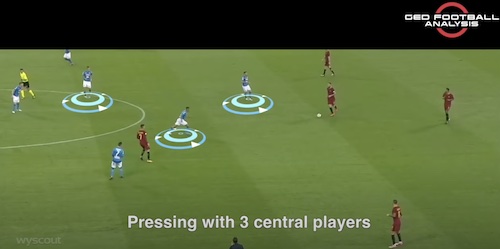
- Pressing triggers: What makes the team press as a group: a backward pass, a poor touch, a pass to the sideline?
- Transitions: In the five seconds after losing the ball, do players counter-press or drop back?
Practice activity: After watching, set up a 4v4 small-sided game with two rules taken from the team you studied. For example, “must play out from the back” for one team and “win it back within five seconds” for the other. Swap after five minutes, then ask players which style felt more natural. Small-sided games give every player more touches and more 1v1 decisions, and that is where game understanding grows.
Frequently Asked Questions
When is the 2026-27 Nations League final?
The Nations League Finals are scheduled for June 9-13, 2027, after quarter-finals in March 2027. The host had not been confirmed as of early October 2026.
Who are the current Nations League champions?
Portugal, who beat Spain on penalties in the 2025 final.
Does the Nations League help teams qualify for EURO 2028?
Yes, indirectly. Main qualifying decides most places, but play-offs in March 2028 linked to Nations League results offer some teams a second route.
Coach it with your own team.
The Coerver Session Planner gives youth coaches ready-made practice sessions built on the Coerver method: fun, organized and packed with touches on the ball.