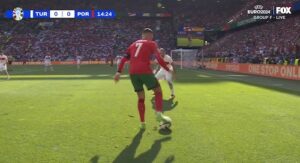





Cristiano Ronaldo’s future with Portugal is uncertain as of early October 2026. After being left on the bench under new coach Jorge Jesus, the 41-year-old left the national team’s training camp on September 30, and neither he nor the federation has announced whether he will play for Portugal again. Whatever happens next, his career offers young players clear lessons in preparation, leadership and adapting your game as you grow.
What Has Happened Since the 2026 World Cup
Portugal’s World Cup ended in the round of 16, when Spain, the eventual champions, scored late to win 1-0 on July 6. Before that match, Ronaldo had confirmed that the 2026 tournament would be his last World Cup, but he did not commit to a decision on his wider international career.
Roberto Martínez left after the tournament, and Portugal appointed Jorge Jesus, who previously coached Ronaldo at Al-Nassr in Saudi Arabia. In July, Jesus told reporters that as long as Ronaldo was playing and in condition to be selected, he would pick him.
Jesus did name Ronaldo in his first squad for the Nations League in September. Ronaldo captained Portugal in a 1-0 home win over Wales on September 24 but did not score. He was an unused substitute in the 2-1 win over Norway on September 27. On September 30, after Jesus said at a news conference that Ronaldo would not start against Denmark, Ronaldo left the camp.
In a statement on Instagram, reported by Sky Sports, Ronaldo said that following the coach’s press conference and a conversation with the president of the Portuguese Football Federation, he had decided to leave the training camp, and that he would later explain his reasons. Jesus said there had been “no incident whatsoever” and that he makes the selection decisions. Portugal went on to win 4-2 in Denmark on October 1 without him.
Several outlets, including Sports Illustrated citing the Spanish newspaper Marca, have reported that the federation hopes to bring both sides together. As of early October 2026, neither Ronaldo nor Jesus has given a full public account, and Ronaldo has not announced his international retirement. He has scored 146 goals in 234 games for Portugal, the most by any man in international soccer.
Lesson 1: Preparation Is a Habit, Not a Phase
Ronaldo is still playing top-level soccer at 41, and a big reason is his preparation. His approach to fitness, recovery, sleep and nutrition has been well documented throughout his career. Our article on the Cristiano Ronaldo warm-up routine shows how seriously he takes even the first minutes of a session.
For young players, the lesson is simple: the habits you build at 12 decide what you can do at 18. You do not need a professional’s program. You need consistency.
Activity: The Daily 15. Every day, spend 15 minutes on the ball at home. Five minutes of ball mastery (sole rolls, inside-outside touches, step-overs), five minutes of juggling and five minutes of wall passing with both feet. Write your juggling record in a notebook. Small daily work adds up faster than one long session a week.
Lesson 2: Leadership Looks Different at Every Stage
Ronaldo has captained Portugal for many years, including when they won Euro 2016 and two Nations League titles. Leadership for a young player rarely means a captain’s armband. It means:
- Arriving ready to train and helping set up equipment.
- Encouraging a teammate after a mistake.
- Communicating on the field: calling for the ball, warning teammates of pressure.
- Handling disappointment, such as not starting, in a way that helps the team.
The last point is worth discussing honestly with players. Every athlete, from the youngest U8 to a five-time Ballon d’Or winner, will face moments when they are benched or their role changes. Coaches and parents can use the current news as a conversation starter: how do we show our feelings in a respectful way, and how do we keep working to earn our place?
Lesson 3: Adapting From Winger to Striker
Ronaldo’s position has changed several times. At Sporting CP and in his early years at Manchester United, he was an explosive winger known for step-overs and dribbling runs. Over time, especially at Real Madrid, he spent more time in and around the penalty area. In later years he has mainly played as a central striker.
His game changed with that move. He dribbled less and focused more on movement in the box, heading, timing his runs and finishing with one or two touches. That evolution helped him keep scoring as his speed naturally changed with age.
Young players should take two things from this:
- Build a complete toolbox early. Ronaldo could move to striker because he already had strong finishing with both feet and in the air. Players who master the ball and learn several positions have more options later.
- Be open to change. Coaches may move you to a new position. Treat it as a chance to learn, not a punishment.
Our guide on how to play like Cristiano Ronaldo covers his skills from both phases of his career.
A Practice Session: Winger to Striker
This 30-minute session lets players train both sides of Ronaldo’s game.
Part 1: Winger Skills (10 minutes)
Set up a cone as a defender 15 yards from a small goal on an angle from the wing. The player dribbles at the cone, performs a step-over or a chop, and accelerates past before crossing or shooting. Repeat on both wings so both feet get work. This is a good place to practice Coerver-style 1v1 moves at game speed.
Part 2: Striker Movement (10 minutes)
A server stands wide with several balls. The striker starts at the top of the box beside a cone defender. On the server’s signal, the striker checks away from the cone, then darts to the near post or far post to finish a pass or low cross with one touch. Vary the timing so the striker learns to arrive at the right moment instead of waiting.
Part 3: Game (10 minutes)
Play 3v3 with wide channels. A goal scored from a cross or a one-touch finish counts double. Rotate players between the wing and central roles each round.
What to Watch For in the Coming Weeks
- Any public statement from Ronaldo explaining his decision to leave the camp.
- Comments from Jorge Jesus or the Portuguese Football Federation on his status for future squads.
- How Portugal’s attack performs in its remaining Nations League matches, starting with Norway on October 4.
Until those answers come, the best approach is to stick to the facts and to the lessons his long career already offers.
Frequently Asked Questions
Has Cristiano Ronaldo retired from Portugal?
As of early October 2026, no. He left the national team camp on September 30 after being benched, but he has not announced his international retirement. He has said 2026 was his last World Cup.
Why did Ronaldo leave the Portugal camp?
He left after coach Jorge Jesus said he would not start against Denmark. Ronaldo said he would explain his reasons later. Jesus said there had been no incident.
What can young players learn from Ronaldo changing positions?
Building a complete set of skills early, including finishing with both feet and heading, gives you the flexibility to adapt as your body and your team’s needs change.
Want to pull off moves like these?
Coerver Moves breaks down the 1v1 moves the world’s best players use, step by step on video, so you can practise them at home and use them in games.