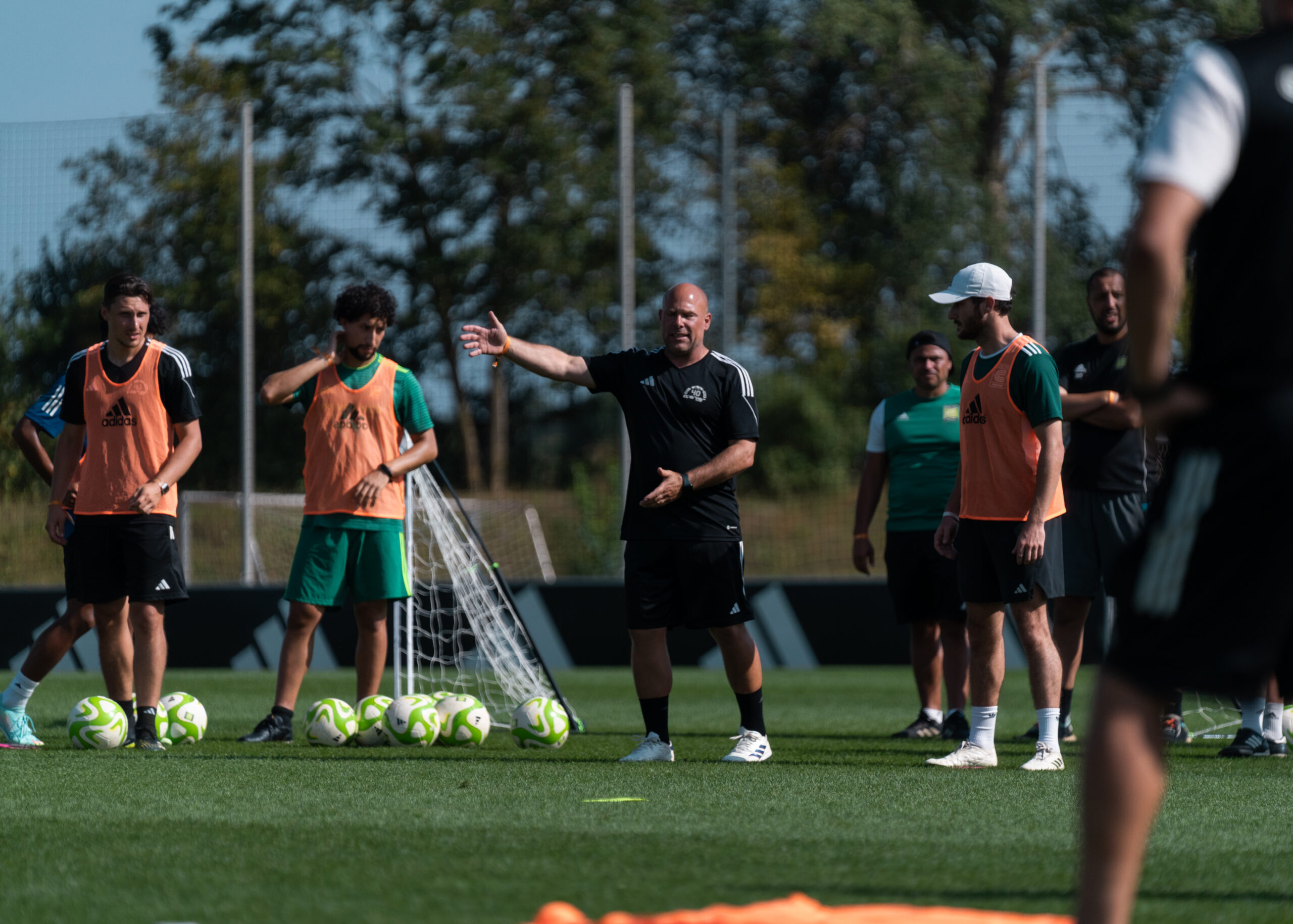










A soccer shepherding drill teaches defenders to steer an attacker where the defender wants them to go, usually down the line, away from goal, toward a teammate or onto the attacker’s weaker foot. Instead of diving in for the tackle, the defender controls the attacker with body position and patience, then wins the ball when the moment is right.
Shepherding is also called jockeying or channeling. It is one of the most important defending skills a young player can learn, and the drill below is a simple, competitive way to coach it.
What Is Shepherding in Soccer?
Shepherding means herding the attacking player in the direction you want, just as a shepherd guides sheep. You might push them toward the sideline, where the touchline acts like an extra defender. You might steer them toward a supporting teammate, or toward their weaker foot so their options shrink.
Good shepherding also means making the attacker think. Stand them up, slow them down and force them to put their head down. All the while, communicate with the defenders behind you so the whole team knows which way you are forcing play.
Inside or outside?
Which way should you shepherd? It depends on where you have the most defenders and support. Many coaches want defenders to force attackers down the line and away from the middle. Others prefer to force play into the middle, where it is more congested and there are more defenders to help. In the end, the defender has to judge where they can best contain the attacker and win the ball. This drill focuses on forcing play down the line, but you can flip it.
How to Shepherd an Attacker: Step by Step
- Close down quickly, then slow down. Sprint to close the space while the ball is traveling, then take short, quick steps as you get near so you do not overrun the attacker.
- Get side-on. Stand at an angle, not square, with one foot in front of the other. Your body shape tells the attacker which way they can go.
- Show them the line. Position yourself slightly to the inside so the only open path is toward the sideline or the direction you choose.
- Keep the right distance. Stay about an arm’s length away. Too close and they can spin past you. Too far and they have time to turn or pass.
- Stay low and patient. Bend your knees, keep your weight on the balls of your feet and watch the ball, not the attacker’s tricks.
- Talk. Let teammates know where you are forcing play so they can cover.
- Win the ball at the right moment. Tackle when the attacker takes a heavy touch, looks down or runs out of space.
Common Mistakes
- Diving in. Lunging for the ball lets the attacker go past you easily.
- Standing square. A flat body position gives the attacker two directions to choose from.
- Watching the feet tricks. Step-overs and feints are designed to fool you. Watch the ball.
- Backing off too far. Giving too much space lets the attacker pass, shoot or cross.
- Silent defending. Without communication, the cover defender does not know where to be.
- Crossing your feet. Use side steps so you can change direction quickly.
The Shepherding Drill: Setup and Session
Field size: 30 yards by 20 yards, set along a sideline.
Number of players: at least two, ideally groups of four to eight.
Age range: best for about ages 12 to 16, and easy to simplify for younger players.
Equipment: cones, balls and practice vests.
Setup: Along the inside edge of the grid, set three small gates made of cones. The attacker starts at one end and dribbles toward the other. The defender tries to force the attacker down the line and away from the middle. The attacker scores by cutting back inside and dribbling through one of the gates. The first gate is worth the most points, because cutting inside early is the most dangerous outcome for the defense.
The defender is free to win the ball outright or keep pushing the attacker down the line. If the attacker is forced out of the end of the grid or loses the ball, the defender wins the round.
- Warm-up (5 minutes): Defensive footwork without a ball. Side shuffles, backpedals and quick changes of direction across the width of the grid.
- Shadow shepherding (5 minutes): The attacker dribbles at walking pace and the defender practices body shape and distance without tackling.
- 1v1 to the gates (10 minutes): Play the main drill in rounds of about 20 seconds. Rotate attackers and defenders after every 3 rounds.
- 2v1 progression (6 minutes): Two defenders against one attacker. Open the inside gates a little wider. The first defender shepherds while the second covers.
- 2v2 progression (8 minutes): Two attackers try to cut inside through the gates while two defenders force them down the line.
- Switch sides (6 minutes): Run the drill on the other sideline so attackers have to cut in with the other foot and defenders practice forcing to both sides.
The video above, from IMG Academy soccer coach Mel Mahler, adds three more defending drills covering press and cue, closing speed and defensive positioning. They pair well with this session.
The Coerver Angle
Coerver Coaching is best known for developing attacking players who can win their 1v1 battles, and that is exactly why it builds better defenders too. When players practice moves day after day, they learn how attackers think, how feints work and when a dribbler is about to change direction. Put those players on the other side of a 1v1 and they read the game much better. Pairing skill development with defending drills like this one gives young players a complete understanding of the duel.
For more defending ideas, read about defenders putting their hands behind their backs, try the recovery run soccer drill, and browse 100 individual soccer drills.
Frequently Asked Questions
What does shepherding mean in soccer?
It means guiding an attacker in the direction you want, using body position rather than tackling, usually toward the sideline, a teammate or the attacker’s weaker foot.
Is shepherding the same as jockeying?
They are very similar. Jockeying describes the defender’s patient, side-on movement, and shepherding describes the goal of steering the attacker. Most coaches use the terms together.
Should defenders force attackers inside or outside?
It depends on the team’s plan and where the support is. Forcing outside uses the sideline as an extra defender. Forcing inside sends the attacker into more traffic. Coaches should make the plan clear.
How long should a shepherding drill last?
About 30 to 40 minutes is plenty, including progressions. Keep 1v1 rounds short because defending at full intensity is tiring.