









Soccer Practice Planning for Beginners
Taking charge of a youth soccer team for the first time can feel overwhelming. Many new parent coaches immediately start searching for drills, games, formations, and practice plans, hoping to find the perfect session.
Good soccer practice planning for beginners, however, is not about collecting as many drills as possible.
It is about creating a simple, organized environment where every player is active, learning, and enjoying the ball.
For new parent coaches, the best place to begin is with a proven player-development framework. The Coerver Coaching First Skills program, supported by Coerver Ball Mastery and Coerver Moves, gives coaches a practical pathway for designing high-quality, engaging soccer practices without having to invent every activity from scratch.
Coaches looking for additional practice ideas, skill-development guidance, and youth soccer training resources can visit Play Great Soccer.
These resources help answer the three questions every beginner coach faces:
- What should I teach?
- How should I teach it?
- How do I keep the players interested?
When those questions are answered, soccer practice planning becomes much easier.
What Makes a Good Beginner Soccer Practice?
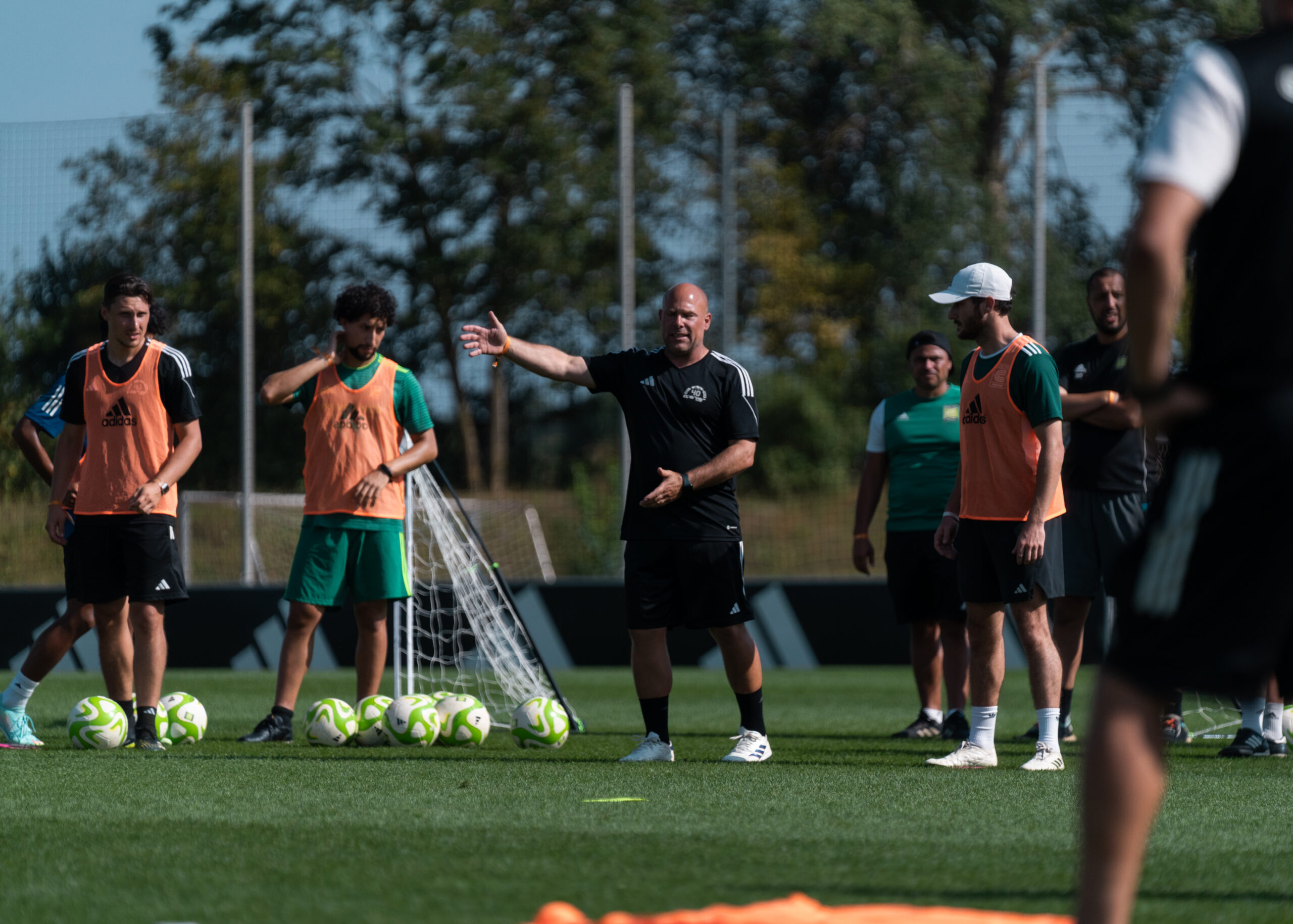
A successful beginner soccer practice should be easy to understand, active from the opening minute, and centered around the individual player.
Young players do not need long tactical lectures or complicated team patterns. They need opportunities to develop comfort with the ball, confidence in their movements, and the courage to try new skills.
A quality beginner soccer practice should include:
- Plenty of touches on the ball
- Activities that involve every player
- Short, clear coaching instructions
- Opportunities to use both feet
- Individual skill challenges
- One-versus-one situations
- Small-sided games
- Encouragement and positive feedback
The goal is not to produce a perfect team in one practice. The goal is to help every player leave the field feeling more capable than when the session started.
That is where the Coerver Coaching approach is especially valuable.
Start with the Coerver Coaching First Skills Program
The Coerver Coaching First Skills program is an excellent starting point for new parent coaches because it introduces young players to soccer through simple, progressive skill development.
Instead of placing children into long lines or asking them to memorize complicated drills, First Skills helps coaches build practices around movement, ball control, confidence, and enjoyment.
The program gives parent coaches a clear structure to follow. This is important because many first-time coaches know what they want their players to improve, but they are not always sure how to organize the learning process.
First Skills helps bridge that gap.
A parent coach can use the program to introduce:
- Basic coordination
- Familiarity with the ball
- Dribbling with different surfaces of the feet
- Turning and changing direction
- Stopping and starting
- Simple one-versus-one skills
- Passing and receiving
- Small-sided play
The activities can be adjusted to suit the age and ability of the players. A movement that is challenging for a five-year-old may become a warm-up activity for an eight-year-old.
The key is to keep the organization simple and allow players to learn through repetition and play.
For additional youth soccer coaching resources, parent coaches can use Play Great Soccer as a practical reference when preparing weekly sessions.
Make Coerver Ball Mastery the Foundation of Every Practice
If there is one area that should appear regularly in a beginner soccer practice plan, it is Coerver Ball Mastery.
Ball Mastery develops a player’s ability to control and manipulate the ball using different parts of both feet. It provides the technical foundation that supports dribbling, passing, receiving, turning, attacking, and one-versus-one play.
For a beginner, the ball can feel unpredictable. It rolls too far away, gets trapped under the feet, or ends up on the wrong side of the body. Ball Mastery helps players gradually become more comfortable, coordinated, and confident.
The basic principle is simple: whenever possible, every player should have a ball.
This gives each child more repetitions and more opportunities to learn. Instead of one player working while several others watch, the entire team can develop at the same time.
Beginner Ball Mastery activities may include:
- Inside-foot touches
- Outside-foot touches
- Sole rolls
- Toe taps
- Pull-push movements
- Side-to-side movements
- Forward and backward ball control
- Changes of direction
- Combinations using both feet
The purpose is not to rush through a long list of techniques. Choose one or two movements and give the players time to become familiar with them.
A new parent coach might begin with inside touches and sole rolls. Once the players show control, the coach can add movement, changes of direction, or a simple challenge.
For example:
“Can you complete ten touches without losing control?”
“Can you use your weaker foot?”
“Can you keep your head up while moving?”
“Can you perform the movement and accelerate into space?”
These small challenges make repetition more engaging while helping players take responsibility for their own improvement.
Parent coaches can find more ideas for building confident and creative players through the soccer training information available at Play Great Soccer.
Use Coerver Moves to Make Practice Exciting
After players develop better control of the ball, they need to learn how to use that control against an opponent.
This is where Coerver Moves become an essential practice-planning resource.
Coerver Moves give young players practical ways to beat opponents, protect the ball, change direction, and create space. They also bring imagination and excitement into the session.
For beginners, moves should be introduced one at a time. The coach should demonstrate the movement clearly, allow players to practice without pressure, and then create a simple game in which they can try the move against an opponent.
A useful teaching progression is:
1. Learn the Movement
Players practice the move individually with their own ball.
2. Add Movement and Speed
Players perform the move while dribbling toward a cone, line, or target.
3. Introduce Passive Pressure
A partner or coach provides light pressure without attempting to win the ball immediately.
4. Play One Versus One
Players use the move in a competitive situation.
5. Apply It in a Small-Sided Game
Players are encouraged to recognize the right moment to use the move during normal play.
This progression is important. If a coach moves directly from demonstration to full pressure, many beginners will struggle.
When players have time to understand the technique first, they are more likely to attempt it confidently in a game.
Moves such as a drag-back, inside cut, outside cut, step-over, or simple stop-start can give young players tools they can use immediately.
The objective is not for every player to perform every move perfectly. The objective is to develop brave, creative players who are willing to take responsibility for the ball.
For more help teaching dribbling, one-versus-one play, and individual technique, explore the soccer skill-development resources at Play Great Soccer.
A Simple 60-Minute Beginner Soccer Practice Plan
New parent coaches do not need a complicated session containing eight or ten different drills. A small number of well-organized activities will usually produce better learning.
Here is a simple practice structure using First Skills, Ball Mastery, and Coerver Moves.
Arrival Activity: 5 Minutes
Give every player a ball as soon as they arrive.
Set up a small area and allow the players to dribble freely. Ask them to explore the space, change direction, and avoid other players.
This eliminates standing around and establishes the expectation that practice begins with the ball.
First Skills Movement Activity: 10 Minutes
Use a simple coordination and dribbling game.
Players can move through gates, dribble around cones, or follow the coach while changing speed and direction.
Include basic commands such as:
- Stop
- Go
- Turn
- Change foot
- Change direction
- Find open space
Keep the instructions brief and the players moving.
Coerver Ball Mastery: 10 to 12 Minutes
Choose one or two Ball Mastery movements.
Demonstrate each movement slowly, then allow the players to practice. Add individual challenges based on control rather than speed alone.
Progress from stationary practice to movement through the area.
Coerver Move of the Day: 10 to 12 Minutes
Introduce one move.
Show the players what the move looks like, explain when it might be used, and allow them to practice toward a cone or imaginary defender.
Once they understand the basic movement, add a simple one-versus-one activity.
One-Versus-One Game: 10 Minutes
Create several small fields so multiple players can compete at the same time.
The attacker tries to dribble over an end line or through a gate. The defender tries to win the ball.
Encourage players to use the move they practiced, but do not stop the game every time they make a mistake.
Let them experiment.
Small-Sided Game: 10 to 15 Minutes
Finish with a two-versus-two, three-versus-three, or four-versus-four game.
Small-sided games provide more touches, more decisions, and more opportunities for players to attack and defend.
Avoid giving constant instructions from the sideline. Observe the players and look for moments when they use the Ball Mastery skills or Coerver Moves from earlier in the session.
Practice Review: 2 Minutes
Bring the players together and ask one or two simple questions:
“What move did we learn today?”
“When could you use that move in a game?”
“What was your favorite challenge?”
This helps reinforce the session without turning the review into a lecture.
Coaches can use this structure every week and supplement it with new beginner soccer practice ideas as their players develop.
How to Keep Beginner Soccer Practices Engaging
Young players do not need to be entertained every second, but they do need to remain involved.
The easiest way to lose their attention is to make them stand in long lines while one player completes a drill. The easiest way to improve engagement is to increase the number of balls, reduce the size of the groups, and create activities in which everyone participates.
Keep Explanations Short
Demonstrate the activity, give one or two important coaching points, and let the players begin.
You can add information while they are working.
Use Challenges Instead of Constant Correction
Rather than telling a player everything that went wrong, give them a problem to solve.
“Can you keep the ball closer?”
“Can you turn away from the defender?”
“Can you use your other foot?”
“Can you accelerate after the move?”
This encourages learning without creating fear of mistakes.
Change Activities Before Energy Disappears
Most beginner activities should be relatively short. When players are no longer focused, progress the challenge or move to the next part of the practice.
Create More Than One Playing Area
When possible, divide the team into smaller groups. Two small one-versus-one fields are usually more productive than one large field with players waiting.
Praise Effort and Bravery
Recognize players who attempt a new move, use both feet, recover after losing the ball, or help a teammate.
Development is not only about successful execution. It is also about creating the confidence to keep trying.
Common Soccer Practice Planning Mistakes
New parent coaches often make mistakes because they are trying to give the players a professional-looking practice.
Beginner players, however, do not need professional-team tactics. They need an environment designed for their stage of development.
Planning Too Many Activities
A practice with too many drills often feels rushed. Players need time to understand, repeat, and apply a skill.
Talking Too Much
Young players learn by doing. A demonstration followed by action is usually more effective than a long explanation.
Using One Ball for the Entire Team
Whenever possible, give every player a ball during technical development. More balls create more touches and fewer lines.
Focusing Only on Passing
Passing is important, but beginner players must first become confident receiving, controlling, carrying, and protecting the ball.
Avoiding One-Versus-One Play
Some coaches worry that dribbling encourages selfish play. In reality, players need the confidence to control the ball under pressure before they can consistently connect with teammates.
Correcting Every Mistake
Mistakes are part of skill development. Coaches should identify the most important correction and allow players to keep playing.
A Done-for-You Approach for New Parent Coaches
The greatest benefit of using the Coerver Coaching First Skills program, Coerver Ball Mastery, and Coerver Moves is that they provide a repeatable system.
A parent coach does not need to search for a completely different practice every week.
The same basic structure can be used throughout the season:
- Begin with individual movement and the ball.
- Develop a Ball Mastery technique.
- Introduce a Coerver Move.
- Apply the skill in one-versus-one play.
- Finish with a small-sided game.
The content can change while the structure remains familiar.
One week may focus on inside and outside touches with an inside cut. Another may focus on sole control and a drag-back. The next may combine a stop-start move with one-versus-one attacking.
This consistent structure helps the players understand how practice works, while the changing skills keep the sessions fresh.
It also gives the coach a clear development pathway.
For coaches who want more guidance without having to create everything themselves, Play Great Soccer offers a useful starting point for planning purposeful, player-centered soccer training.
Build Players Before Building the Team
The temptation for many new coaches is to begin with positions, formations, and team shape.
Those areas will become important later, but young beginners first need the technical ability to participate in the game.
A player who is comfortable with the ball can look up, make decisions, combine with teammates, and respond to pressure. A player who is uncomfortable with the ball will often panic, kick it away, or avoid becoming involved.
That is why individual skill development is not separate from team development.
It is the foundation of team development.
By using the Coerver Coaching First Skills program, Coerver Ball Mastery, and Coerver Moves, parent coaches can create practices that develop capable individuals while still teaching players how to compete, cooperate, and enjoy the game together.
Make Your Next Practice Simple, Active, and Player-Centered
Soccer practice planning for beginners does not have to be complicated.
Start with a clear objective. Give every player as many touches as possible. Keep the activities simple. Teach one skill at a time. Progress from individual practice into pressure and small-sided play.
Most importantly, create an environment where young players feel confident enough to try.
The Coerver Coaching First Skills program gives new parent coaches a practical starting point. Coerver Ball Mastery provides the technical foundation, and Coerver Moves help players apply their skills creatively against opponents.
Together, they offer a proven, easy-to-follow resource for coaches who want to design engaging soccer practices and give every player the opportunity to improve.
A good practice does not need to look complicated.
It needs to keep players moving, learning, competing, and loving the ball.
Visit Play Great Soccer for more youth soccer coaching information, player-development ideas, and practical resources for creating better practices.
Supporting Topics
- Beginner soccer practice plan
- Soccer drills for parent coaches
- Youth soccer practice planning
- Coerver Coaching First Skills
- Coerver Ball Mastery
- Coerver Moves
- Beginner soccer drills
- Youth soccer skills training
- Engaging soccer practices
- Soccer coaching for beginners