





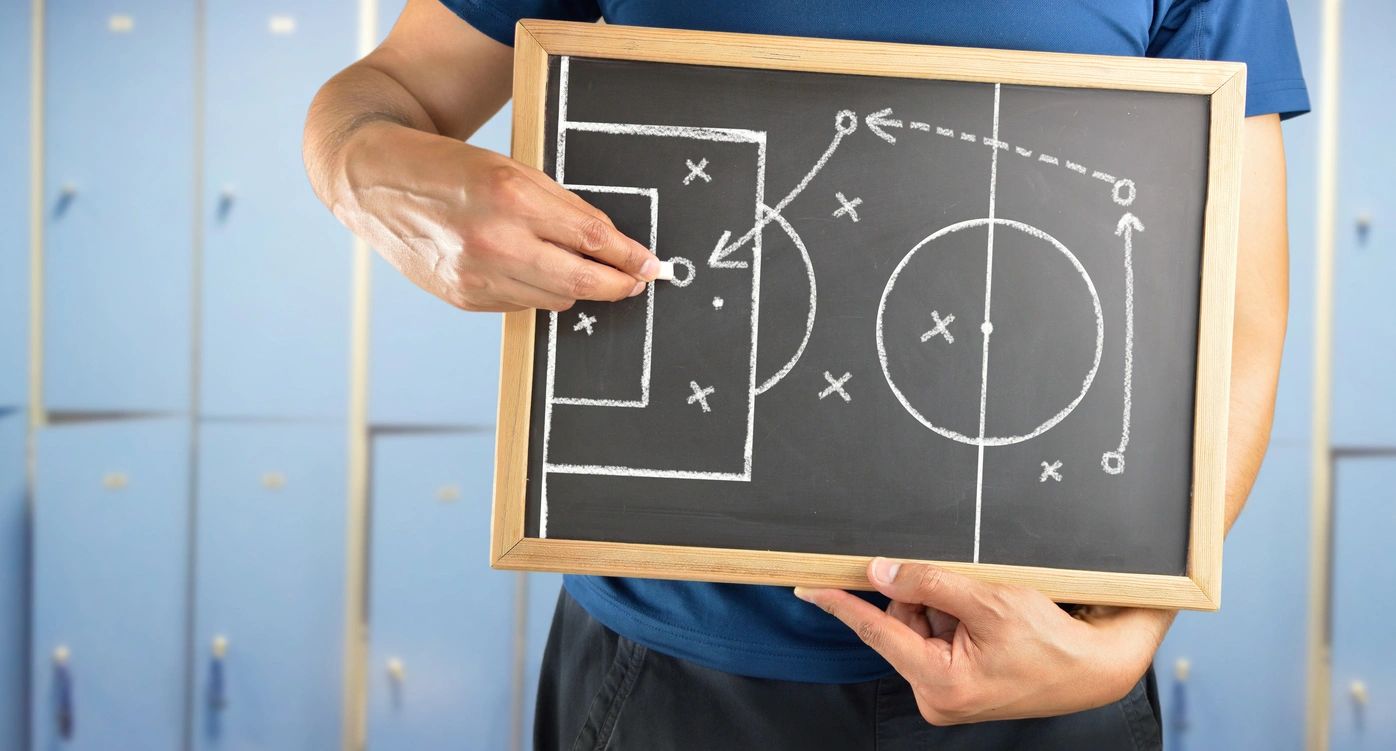
The third player combination is one of the best ways to beat a defender without needing a perfect pass or a fancy move. Player A passes to B, B sets the ball for C, and C arrives in a space the defender could not cover. It is simple on paper. The hard part for young players is seeing when to use it and timing the run.
These third player combination drills start with a basic pattern and build to a live game. They work well for U10 to U14 teams and only need a few cones, some balls and a couple of mini goals.
This type of drill is a great way to get young players to communicate verbally with one another. Very often players are unsure or maybe just shy and need to be taught how and when to call for the ball. They also need to learn how the decision by the player with the ball decides whether a pass is made or if the player with the ball uses them as a decoy.
What Is a Third Player Combination?
A third player combination, often called a third man run, uses one teammate to reach another when the direct pass is blocked. The defender is focused on the ball and the first receiver. That opens space for the third player to move into.
For young players it helps to explain it this way: “If you can’t pass to your teammate directly, find someone who can.”
FIFA’s 3v2 resource on exploiting space between defenders lists third player combinations as one of the main ways to use a numbers advantage. The progression below takes that same idea and puts it into a simpler setting for youth teams.
Why Youth Players Struggle With It
Most young players can run a combination when the coach sets it up on cones. Once a defender shows up, things change. The runner goes too early and gets tracked. The passer forces the ball into a lane that is closed. Or nobody moves at all and the player on the ball ends up trying to dribble through three opponents.
The answer is to keep the pattern short and get to opposed play quickly. Players need defenders in front of them to learn when the combination is the right choice and when it is not.
Drill 1: Three Player Triangle
Setup: Groups of three in a triangle about 10 yards apart.
How it works: A passes to B and moves to a new support spot. B lays the ball into the path of C, who is moving away from their cone. C controls and finds A. Then reverse the direction and rotate who starts.
Spend about five minutes here. The cones are only a starting point. Players should not run back to them after every pass. Let them take extra touches while they learn the pattern.
Coaching points:
- Accurate pass into B’s front foot.
- B opens their body to see C before the ball arrives.
- C starts moving while the ball is still traveling.
Drill 2: 3v1 Through a Defender
Setup: Four players in a 12 x 18 yard rectangle. Three attackers, one defender.
How it works: Attackers try to move the ball from one short end to the other. They score by receiving a pass beyond the defender and dribbling over the far line under control. The defender can press, intercept and recover. Rotate the defender every 45 seconds and give a short rest.
The defender gives the attackers a reason to use the third player. But if there is a gap to dribble through, they should take it. That decision is what we want them learning.
Coaching points:
- The two support players should not stand in the same passing lane.
- One player offers a short option while the other moves beyond the defender.
- The player on the ball looks forward first, before choosing the connecting pass.
Drill 3: Directional 3v2 Game
Setup: A 20 x 25 yard field with two mini goals at each end. Three attackers against two defenders.
How it works: Play until a goal, the ball goes out, or 25 seconds is up. If defenders win the ball, they attack the opposite goals. Rotate roles so every player attacks and defends.
Now watch the timing. Does the first pass pull a defender toward the ball? Does the third player move into the space that opens up? A runner who goes too early is easy to follow. A runner who waits until the ball arrives is often too late. Teach players to use the defender’s movement as their cue.
Fixing the Problems You See
Here are the most common problems and simple fixes:
- Passes keep hitting the defender. Help the receiver change their angle so the passing lane opens.
- The runner is always ahead of the play. Slow the first pass down and ask the runner to watch B’s body shape before going.
- Players force the combination every time. If you are giving bonus points for it, remove them and let goals decide the game.
Finish the session with a free 4v4. Do not give any instructions about combinations. Just watch. If players start creating good support angles on their own, they understand it. That tells you more than a perfect pattern on cones ever will.
Building on Individual Skill
At Coerver we start with the individual. A player who is comfortable on the ball can receive, turn and play a quick pass without fumbling. That makes combinations much easier to learn. If your players struggle to control the ball under pressure, spend a session on our soccer receiving drills under pressure first. If you want to see combinations finish with goals, our finishing drills are a natural follow-up.
Frequently Asked Questions
Does the middle player have to use one touch?
No. One touch is great when the next pass is clear and the ball comes in clean. But a controlling touch can help a player protect the ball or find a better angle. Let the situation decide.
What age can players learn third man runs?
You can introduce the basic pattern around U10. Most players start to recognize it in games by U12 or U13, especially if you use small-sided games with defenders.
What is the difference between a give-and-go and a third player combination?
A give-and-go, or wall pass, uses two players. The ball goes from A to B and back to A. A third player combination brings in a third teammate, so the ball goes from A to B to C. It is harder for defenders to read because the final receiver was not involved in the first pass.
More Possession Ideas From Coerver
Coerver Rondos gives you more possession activities and variations to connect individual technique with small group decisions like these.
Sources: FIFA Training Centre, Third player combinations; FIFA Training Centre, 3v2 Attack v Defence: Exploiting spaces between defenders