






The air elastico is one of the most eye-catching skills in soccer. It’s the flip flap, or elastico, performed with the ball off the ground, and it became famous when Ronaldinho flicked the ball outside-in in mid-air, leaving defenders frozen. If you have searched “how to do an air elastico”, this guide breaks the move down step by step, shows you the mistakes that stop most players, and gives you a practice plan so you can actually use it.
I’ll be honest with you up front: the air elastico is an advanced skill. But every player who learns it does so the same way, by first mastering the ground version, then building the touch and timing to do it with the ball in the air.
What Is the Air Elastico?
The elastico (also called the flip flap) is a two-touch move done with one foot. You push the ball outward with the outside of your foot, then snap it back inward with the inside of the same foot, all in one quick, elastic motion. The defender reacts to the first touch and the ball goes the other way.
The move is credited to Brazilian-Japanese player Sérgio Echigo. Brazilian legend Rivellino made it world famous at the 1970 World Cup, and players like Ronaldo, Ronaldinho and Neymar brought it to a new generation. The air elastico is the same outside-then-inside motion, performed on a ball that is bouncing or being juggled, which is exactly what Ronaldinho showed in Nike’s famous “Joga Bonito” commercials.
How to Do the Air Elastico: Step by Step
Master each step before moving to the next. Use your strongest foot first.
- Start on the ground. Learn the regular elastico first: a small push out with the outside of the foot, then a quick drag back across your body with the inside of the same foot. Keep your ankle locked and your touches small.
- Practise from your hands. Drop the ball from your hands so it bounces once. As it comes up, meet it with the outside of your foot near the toes and push it slightly outward.
- Use your knee, not just your foot. The outward touch comes from turning your knee out. Then turn your knee back in and wrap the inside of your foot around the ball to bring it back across your body.
- Keep the ball close. Both touches happen within a few inches. If the first touch pushes the ball too far, you can’t bring it back.
- Add it to juggling. Once you can do it from a drop, try it from a juggle: two or three juggles, then the air elastico, then catch the ball or play it on.
- Finish with a purpose. In a game, the air elastico should take you past a defender or into space. Practise exploding away after the second touch.
Common Air Elastico Mistakes
- Touches too big. The most common mistake. Small, quick touches make the move work.
- A floppy ankle. Lock your ankle so the ball goes where you want it.
- Looking down too long. As you improve, lift your eyes. In a game you need to see the defender’s weight shift.
- Skipping the ground version. If you can’t do a smooth elastico on the ground, the air version will feel impossible.
- No change of pace. A skill without acceleration afterwards is just a trick. Burst away after the move.
When Should You Use the Air Elastico in a Game?
The air elastico is most useful when the ball is already bouncing: after a poor first touch, from a high pass you have cushioned, or when a defender rushes you as the ball drops. The outward touch sells a move one way, and the inward snap takes you the other. Used at the right moment, it buys you the half-second you need to pass, shoot or dribble away.
Don’t force it. The best players choose their skills based on what the defender gives them. That decision-making is just as important as the technique.
A 10-Minute Air Elastico Practice Plan
- Minutes 1-3: Ground elastico in place, 20 reps each foot, small touches.
- Minutes 4-6: Drop-and-bounce elastico from your hands, 15 reps.
- Minutes 7-8: Juggle twice, air elastico, catch. Count clean reps.
- Minutes 9-10: Place a cone as a “defender”. Approach, perform the elastico (ground or air) and accelerate past the cone.
Do this four or five times a week and track your clean reps. You’ll be surprised how fast it comes together.
Why Ball Mastery Comes First
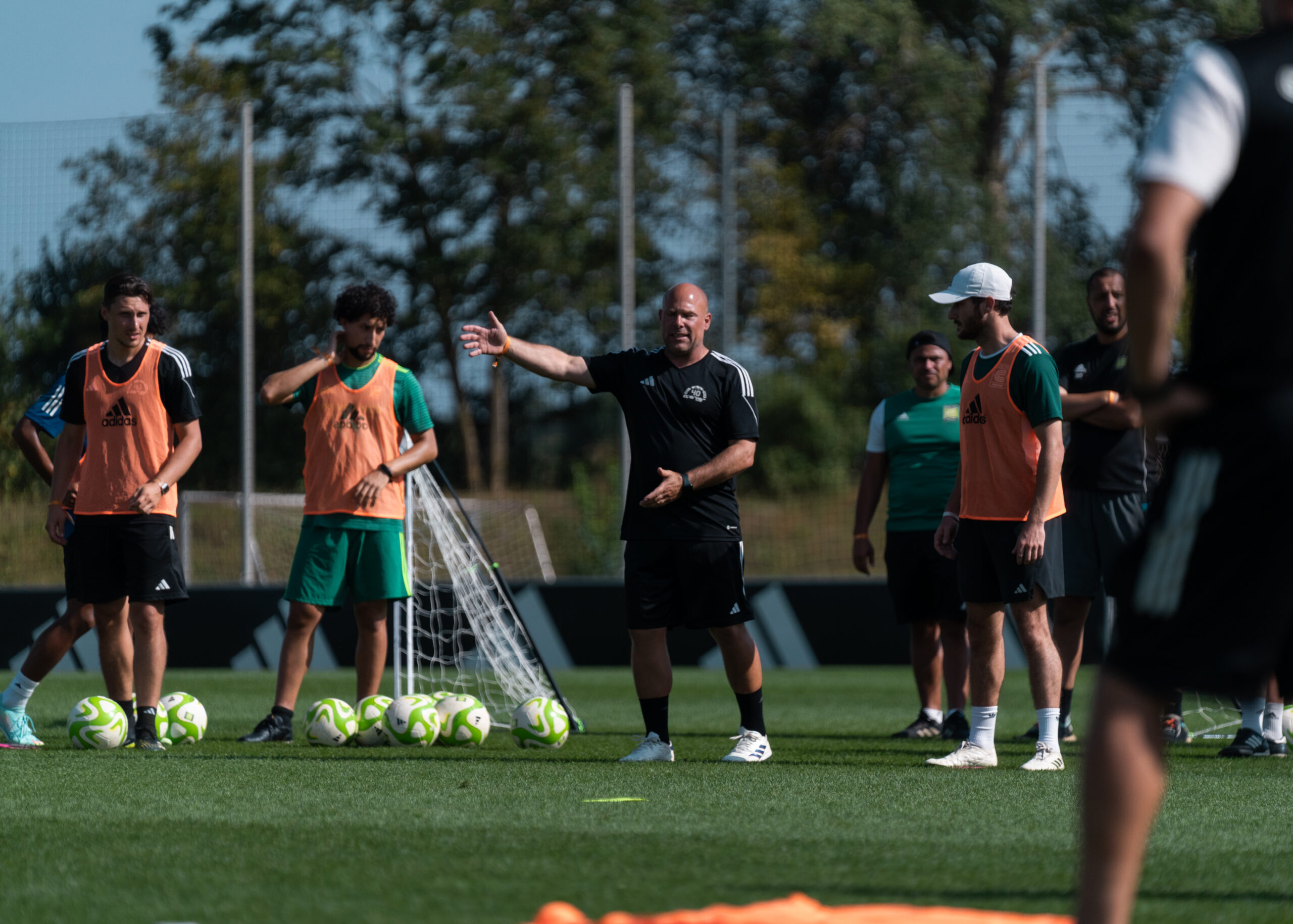
At Coerver Coaching we always say Ball Mastery is the foundation of every skill. The air elastico depends on soft touch, balance and quick feet, the exact qualities daily ball mastery builds. Players who spend just 10 to 15 minutes a day with the ball learn moves like the elastico far faster than those who only practise the move itself.
How Coaches Can Teach the Elastico to Young Players
Coaches often ask whether an “advanced” skill like the elastico belongs in a youth session. My answer is yes, as long as it’s taught as part of a progression rather than as a trick to show off. Here’s how I’d introduce it:
- Ages 7-9: focus on the two foundation touches separately, outside-of-the-foot pushes and inside-of-the-foot pulls, during ball mastery. Keep it playful.
- Ages 10-12: join the touches into the ground elastico, first slowly, then at speed against a cone.
- Ages 13+: introduce the air version from a drop or juggle, and use it in 1v1 games where players decide when it’s the right moment.
Encourage players to try the move in small-sided games and praise the attempt, even when it doesn’t come off. Creative players are built in environments where mistakes are part of learning.
Related Moves to Learn Next
Once you have the elastico, these moves build on the same touch and timing:
- The snake move: a smaller, sneakier cousin of the elastico. See our guide to the Ronaldinho snake move.
- The step over: another classic feint to unbalance defenders. Watch the Robinho step over.
- The no-look pass: Ronaldinho’s other trademark. Learn the no-look pass.
Frequently Asked Questions
Is the air elastico the same as the flip flap?
Yes and no. The flip flap (elastico) is the move; the air elastico is the same move performed with the ball in the air.
Who invented the elastico?
It is credited to Sérgio Echigo, and was made famous by Rivellino and later Ronaldinho.
How long does it take to learn?
With daily practice, most players can do a clean ground elastico within a few weeks. The air version usually takes longer because it adds timing.
Want to pull off moves like these?
Coerver Moves breaks down the 1v1 moves the world’s best players use, step by step on video, so you can practise them at home and use them in games.