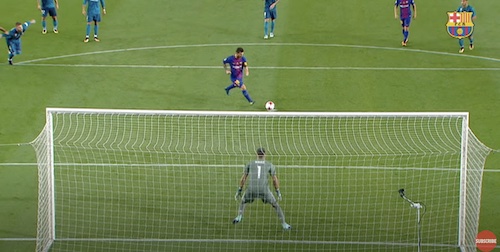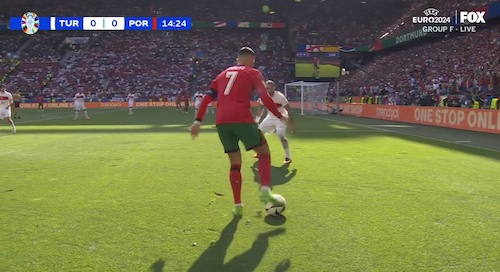









The Frenkie de Jong turn is a simple, deceptive spin that lets a central midfielder escape pressure with the ball still glued to his feet. De Jong shapes his body as if he is going one way, lets the defender commit, then spins out the other way and accelerates into the space he just created. It is his favorite move, and he uses it again and again in games because it works.
If you searched for a “de Jong turn tutorial,” here is the short version: fake one direction with your body, pivot on your standing foot while you drag or roll the ball the opposite way, then explode out of the turn. Slow, then fast. The rest of this page breaks the turn down step by step and gives you a session to practice it.
Who Is Frenkie de Jong and Why His Turn Matters
Frenkie de Jong is a Dutch midfielder who came through the system at Willem II, made his name at Ajax, and joined Barcelona in 2019. At Ajax he was a key part of the young team that reached the Champions League semifinals in 2019, and he quickly became known for one thing above all: he almost never loses the ball under pressure.
His style of play is built on carrying the ball out of tight spaces. Rather than passing sideways when a press arrives, he invites the pressure, then uses his body and small touches to unbalance the defender and glide away. That ability is why so many coaches and fans compare him to Barcelona midfield greats such as Xavi and Iniesta, who were also masters of keeping the ball when the game got crowded.
What stands out most when de Jong does his signature turn is the acceleration afterward. Plenty of players can spin. Very few change pace the moment they come out of it. That burst is what turns a nice move into a real escape. It is the most important lesson in any dribbling move or fake: the change of pace after the skill.
How to Do the Frenkie de Jong Turn: Step by Step
- Check your shoulder before the ball arrives. De Jong’s turns start with information. Know where the defender is coming from and where the open space is.
- Receive with the ball close. Take a soft first touch that keeps the ball under your body, not out in front where the defender can poke it.
- Sell the fake. Lean your upper body and drop your shoulder as if you are going to carry or pass the ball in one direction. Your eyes and hips should tell the same lie.
- Pivot on your standing foot. As the defender shifts their weight to block that direction, plant and rotate on the ball of your standing foot.
- Take the ball with you. Use the sole or the inside of your other foot to drag or roll the ball across your body as you spin, keeping your body between the defender and the ball.
- Open up to the field. Finish the spin facing forward or into the space the defender just left.
- Accelerate. Push the ball out of your feet with your next touch and sprint for three or four steps. This is where you actually beat the defender.
Coaching cues
Keep your knees bent and your weight low so you can rotate quickly. Use your arms for balance and to feel where the defender is. Think “slow, slow, fast”: calm on the receive, calm on the fake, then explosive out of the turn.
Common Mistakes
- No fake at all. If the defender is not fooled, the spin just turns you into their path. Make the first movement believable.
- Turning too early. Wait until the defender commits. Spin while they are still balanced and they simply follow you.
- Ball too far from the body. A big touch during the spin gives the defender a chance to step in. Keep it tight.
- Standing straight up. Upright players turn slowly. Stay low and compact.
- Forgetting the burst. Coming out of the turn at the same speed lets the defender recover. Accelerate every time.
- Only turning one way. Practice spinning to both sides so defenders cannot read you.
Practice Session: De Jong Turn Under Pressure
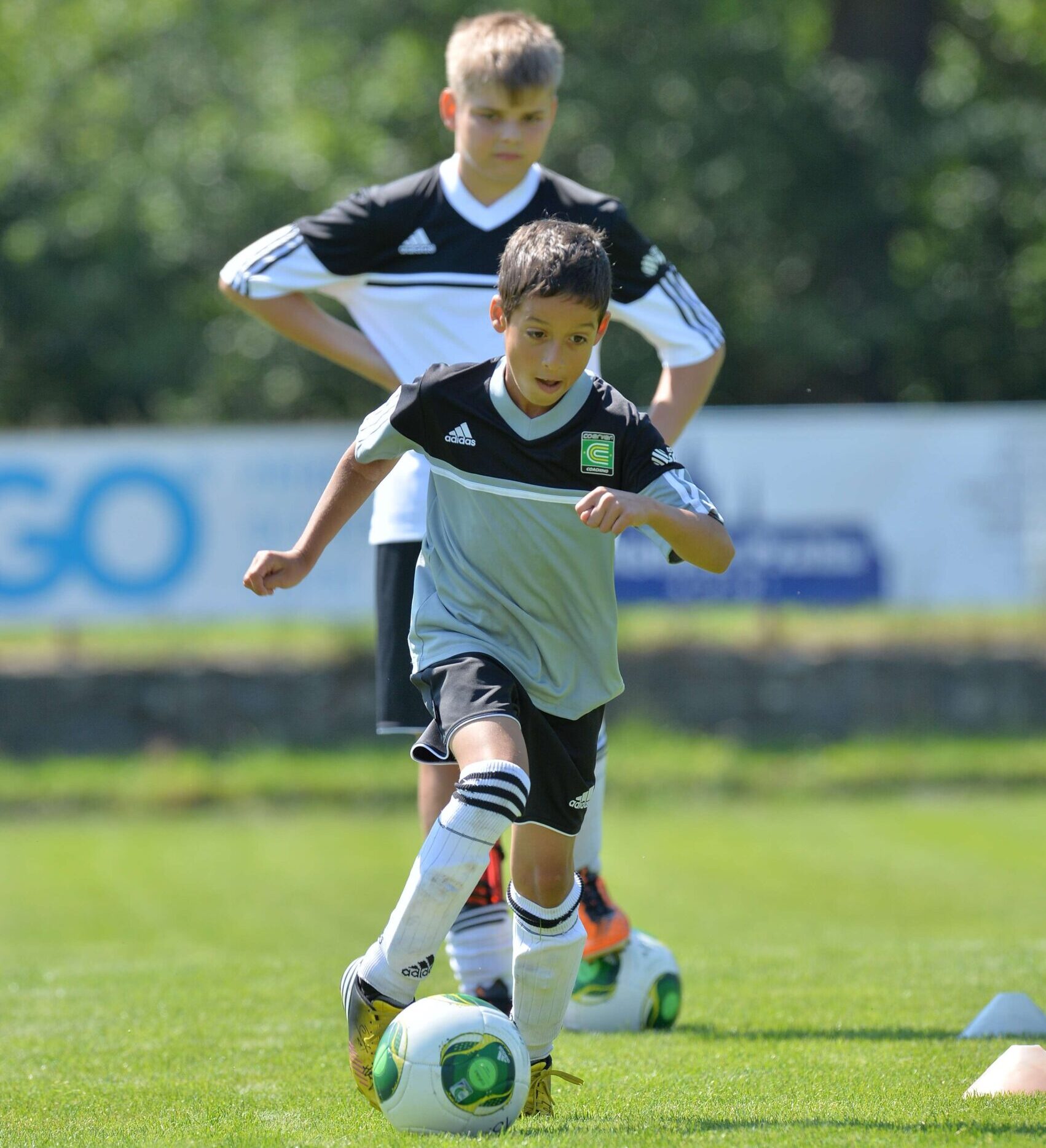
This session takes about 35 minutes and works for players from roughly U10 upward. All you need is a ball per player, cones, and a partner for the later stages.
- Ball mastery warm-up (8 minutes). Sole rolls, inside-outside touches, and sole drags across the body. Work in 30-second bursts with 15 seconds rest. These are the exact touches the turn is built on.
- Unopposed turns (7 minutes). Set a cone as an imaginary defender. Dribble at it, fake one way, spin the other, and accelerate for five yards. Do 10 reps to each side, then switch the fake direction.
- Receive and turn (8 minutes). A partner passes to you from 10 yards. Check your shoulder, receive, fake, spin away, and dribble through a gate of two cones behind you. Do 8 reps per side, then swap roles.
- Passive then live defender (8 minutes). Add a defender who follows you from behind as you receive. Start at half speed for 2 minutes, then go live. Score a point each time you turn and dribble through the gate.
- Small-sided game (4 minutes or longer). Play 3v3 in a small area with a bonus point for any goal that starts with a successful turn out of pressure.
The Coerver Angle
At Coerver Coaching, we see the de Jong turn as a perfect example of why ball mastery comes first. The move only works if the sole drags and body feints are automatic, so the player’s attention can stay on the defender and the space. Our progression is the same one used in the session above: build the touches through repetition, add a fake, then test it in 1v1 and small-group play until it holds up under real pressure. Midfielders who own a reliable turn like this gain the confidence to want the ball in tight areas, and that confidence is what makes a player like de Jong so valuable.
For more ways to get out of trouble, explore our guide to soccer turns and cuts, study how to play like Xavi, and see how Iniesta used “la pausa” to control the tempo of the game.
Frequently Asked Questions
What is the Frenkie de Jong turn?
It is a feint-and-spin move. De Jong pretends to go one way, then pivots and drags the ball the opposite way to escape a pressing defender, finishing with a quick burst of acceleration.
Is the de Jong turn the same as the Cruyff turn?
No. In a Cruyff turn you fake a pass or shot and drag the ball behind your standing leg with the inside of the foot. The de Jong turn is more of a body feint followed by a spin, usually with the ball dragged across the body. Both rely on selling the fake first.
Which positions should learn this turn?
Central midfielders benefit most because they receive with pressure from behind and to the side. Defenders who like to play out of the back, and attacking midfielders who receive between the lines, will also use it often.
How long does it take to learn?
Most players can do the basic movement in one session. Making it reliable under pressure and on both sides takes weeks of regular practice, so build it into your warm-ups and ball mastery work.