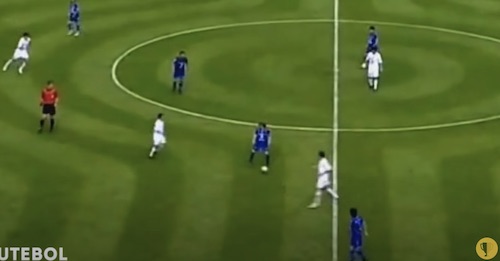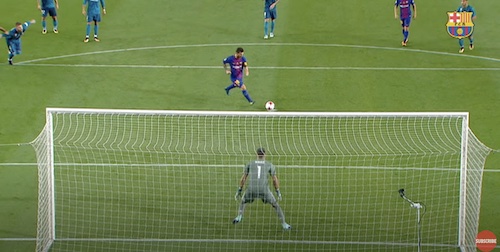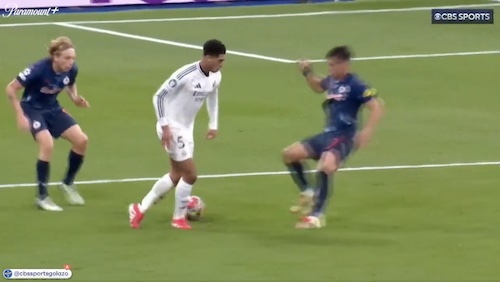









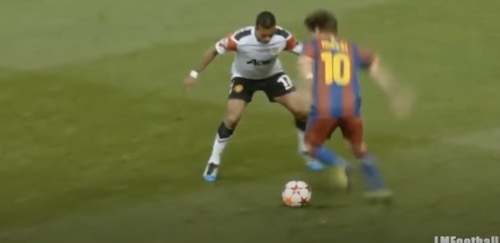
A Messi body feint is a fake made with the upper body, not the feet. Lionel Messi dips a shoulder, leans his hips or shifts his weight as if he is going one way, the defender reacts, and in the same instant Messi pushes the ball the other way. There are no step-overs and no flicks. The ball stays glued to his foot while his body tells the lie.
That is why body feints in soccer are such a good skill for young players. They are simple, they work at any level, and they can be used in tight spaces where there is no room for a fancy trick. If you have searched for “Messi body feint” after watching a clip of him escaping three defenders, this guide breaks down what he is doing and how to practice it.
Why the Messi Body Feint Works
Defenders read the body, not the ball. A good defender watches the attacker’s hips and shoulders because that is usually where the next move starts. Messi uses that habit against them. A small drop of the shoulder or a lean of the hips looks exactly like the start of a real change of direction, so the defender shifts their weight to cover it. Once their weight is committed, they cannot recover fast enough.
Messi does this at full speed and with tiny touches, which makes it almost impossible to read. He is famous for keeping the ball very close, touching it on nearly every stride. That close control means he can change direction the moment the defender leans, instead of waiting for a big touch to arrive.
Feints when he is surrounded
Messi’s body feints often show up when he looks trapped, with two or three defenders closing in. Instead of forcing a pass, he sells a direction with his body, waits for one defender to bite, and slips through the gap that opens. Sometimes he even fools his own teammates, who expect him to go one way and watch him go the other.
The message for young players is the same one the video makes: dribble when it helps your team, not to show off. Messi’s feints are effective because they are purposeful. He uses them to get past a player, open a passing lane or create a shot.
How to Do a Body Feint: Step by Step
- Dribble at the defender. Run straight at them with the ball close, at a controlled speed. A defender who is backing up is easier to unbalance.
- Get the distance right. Start the feint about one to two yards away. Too far and the defender has time to recover. Too close and they can poke the ball away.
- Sell the fake with your upper body. Drop your shoulder and lean your hips toward one side, as if you are about to push the ball that way. Keep the ball under control and do not touch it yet.
- Watch the defender react. You want to see their weight shift or their hips turn. That is your cue.
- Push the ball the other way. Use the outside or inside of the foot to take the ball in the opposite direction from your fake. The touch should go past the defender, not just sideways.
- Explode out of the move. Accelerate for three or four strides. A feint without a burst of speed afterward just gives the defender a second chance.
Variations to try
- Single shoulder drop: fake left with the shoulder, go right with the outside of the right foot.
- Double feint: fake one way, fake back, then go the original way. Useful against a patient defender.
- Feint and stop: lean as if you are going to accelerate, then stop the ball and change direction. Messi often mixes feints with sudden changes of pace.
Common Mistakes
- Faking too small. If the defender does not believe the fake, it does nothing. Commit your shoulder and hips.
- Faking too big. Leaning so far that you lose balance means you cannot change direction quickly.
- Touching the ball during the fake. The ball should stay still or keep rolling straight while the body moves. Touch it only when you go.
- Looking at the ball. Keep your head up enough to see the defender’s reaction. You cannot exploit a lean you did not see.
- No acceleration. Slowing down after the feint lets the defender recover.
- Feinting at the wrong time. Starting the move too far from the defender lets them read it and adjust.
Practice Drill: Body Feint Session
This session takes about 30 minutes and works for players from about U10 up. All you need is a ball, a few cones and, for the later stages, a partner.
- Mirror warm-up (5 minutes): Without a ball, face a partner. One player shifts their shoulders and hips left and right while the other tries to mirror them. Switch roles every 30 seconds. This builds the habit of reading and selling body movement.
- Cone feints (8 minutes): Place a cone as a “defender” in the middle of a 15-yard channel. Dribble at it, perform a shoulder feint about a yard away and exit on the opposite side. Do 10 reps each direction, then 10 reps of the double feint.
- Passive defender (7 minutes): A partner stands in the channel and is allowed to shift but not tackle. The attacker must make the defender move before going. Rotate every 5 reps.
- Live 1v1 (8 minutes): In a 10 by 20-yard grid, the attacker tries to dribble over the end line. Rounds last 30 seconds. Award a bonus point for any goal scored right after a clear body feint.
- Cool-down (2 minutes): Light juggling or ball taps while you talk about which feints worked and why.
The Coerver Angle
At Coerver Coaching, body feints are part of the foundation of beating an opponent 1v1. We teach players to master the ball first through repetition, then add moves, and finally use those moves under pressure in game-like situations. A body feint is a perfect example of why ball mastery matters. If you are not comfortable with the ball, you will look down at it. If you are comfortable, your eyes are free to read the defender, and that is exactly what Messi does so well. Small, efficient moves done at speed, with a clear purpose, are what win games.
Want more? Learn how to play like Lionel Messi, work through other Coerver moves to beat any opponent, and add some soccer turns and cuts to your toolbox.
Frequently Asked Questions
What is a body feint in soccer?
A body feint is a fake made with your shoulders, hips or upper body to make a defender think you are going one way. When the defender shifts their weight, you take the ball in the other direction.
What is the difference between a body feint and a step-over?
A step-over uses the foot circling around the ball to fake a direction. A body feint uses only the body, so it is quicker and can be done in tighter spaces. Many players combine both.
Why are Messi’s body feints so hard to defend?
He keeps the ball very close, so he can change direction at any moment, and he makes the fake at speed with small, convincing movements. By the time the defender realizes the fake, Messi is already gone.
At what age should players learn body feints?
Young players can start as soon as they can dribble with some control. Begin without pressure, then add a passive defender and finally live 1v1s.