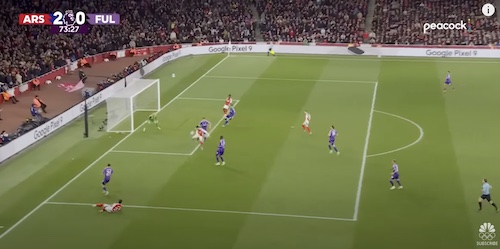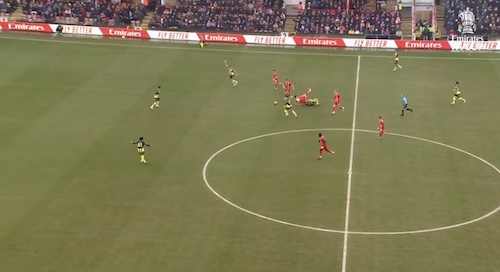










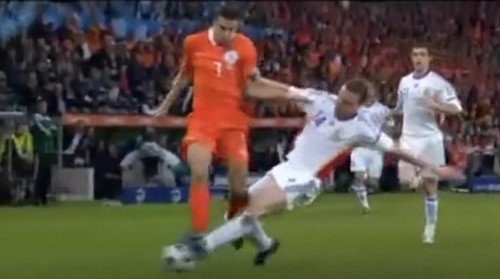
Here is how to slide tackle in soccer: approach from the side or front, drop onto the side of your bent leg, slide along the ground and knock the ball away with the extended foot, ankle locked and studs down. Your target is the ball, never the player, and you should only go to ground when you are confident you can win it.
Can you slide tackle in soccer? Yes. The slide tackle is legal under the Laws of the Game as long as it is not careless, reckless or uses excessive force. But many youth leagues limit or ban it for younger age groups, so check your league’s rules first. Below, the first video shows the technique, and later you will see some of the best slide tackles ever made.
The video shows both the inside and outside versions of the slide tackle, plus some safe tackling drills to use in practice. Notice how the defender skims along the top of the ground rather than diving into it.
When to Slide Tackle (and When Not To)
A slide tackle is a last-resort defending skill. Once you are on the ground, you are out of the play. If you miss, the attacker is through. That is why good defenders stay on their feet, jockey and shepherd attackers wide, and only slide when the ball is a little too far from the attacker’s foot, a teammate is covering, or a shot or cross has to be blocked.
Can you slide tackle from behind in soccer? Tackling from behind is extremely risky. Referees are instructed to punish any challenge that endangers an opponent’s safety as serious foul play, which is a red card. Because a player cannot see a tackle coming from behind, those challenges are nearly always penalized. Teach young players simply not to do it.
In the modern game you see fewer slide tackles than in past decades. Referees are stricter, and coaches value defenders who win the ball and keep possession. Still, a well-timed slide remains a valuable tool.
How to Slide Tackle in Soccer: Step by Step
- Read the moment. Wait for a heavy touch, when the ball is about a yard or more away from the attacker’s foot. That is your window.
- Approach from the side or front. Get level with or ahead of the ball, never directly behind the attacker.
- Drop low on your bent leg. Bend your standing knee and go down on the outside of that leg, thigh and hip, a bit like a baseball slide. Do not jump or leave the ground.
- Extend the tackling leg toward the ball. Lock your ankle, toes up, and play the ball with the inside of the foot (block) or the instep or outside of the foot (poke or hook). Keep your studs pointed down or away, never up at the opponent.
- Keep your eyes on the ball. Watch the ball all the way to contact. Use your arms for balance, not to grab.
- Recover fast. Use the momentum of the slide to get back up quickly, ideally with the ball, or race back into position.
Common Mistakes
- Going to ground too early. Diving in from too far gives the attacker time to step around you.
- Tackling from behind. It is dangerous and usually earns a card.
- Studs showing. Raised studs or a straight, stiff leg into an opponent is how serious injuries happen.
- Two-footed or flying lunges. Both feet off the ground signals excessive force to referees.
- Sliding on hard or artificial surfaces without protection. On turf, slides cause painful burns. Wear sliding shorts or leggings and slide only when necessary.
- Watching the player, not the ball. Your eyes should stay locked on the ball until contact.
Slide Tackle Practice Session (30 Minutes)
Practice on soft, natural grass, ideally a little damp, and keep the early stages unopposed.
- Warm-up and mobility (5 minutes). Light jogging, leg swings, hip openers and lunges.
- Static slides (5 minutes). From a walk, drop onto your side and slide toward a stationary ball, knocking it away with the extended foot. 6 reps on each side.
- Rolling ball slides (5 minutes). A partner rolls a ball across your path from 10 yards. Time the slide to block it. 6 reps each side.
- Jockey then slide (7 minutes). A partner dribbles slowly at half pace. Jockey for 5 yards, then slide only when they take a heavy touch. 5 reps each, then swap.
- 1v1 shepherding game (8 minutes). 1v1 in a 20×10 channel. Defenders earn a point for winning the ball standing up and a bonus point for a clean, legal slide. Coach stops play for any unsafe challenge.
This compilation shows some of the best slide tackles ever in soccer. Watch the timing: the great defenders go to ground at the last moment, from the side, and come away with the ball cleanly.
The Coerver Angle
Coerver Coaching is best known for attacking skill, but the same principle applies to defending: master the basics with the ball, then apply them under pressure. Players who have done thousands of ball mastery touches understand how attackers move the ball, which helps them read heavy touches and time their tackles. In our 1v1 work, defenders learn to stay on their feet first and use the slide tackle as a precise, controlled option, not a gamble.
To round out your defending, try our shepherding soccer defending drill, see why defenders put their hands behind their backs and learn from a cautionary example of a studs-up tackle that caused a serious injury.
Frequently Asked Questions
Can you slide tackle in soccer?
Yes. Slide tackles are legal if you play the ball fairly and do not act carelessly, recklessly or with excessive force. Dangerous tackles result in free kicks and cards.
Can you slide tackle in U11 soccer?
It depends on your league. Many youth and recreational leagues ban slide tackling for younger age groups, while others allow it. Ask your league or referee before games.
How do you slide tackle on turf?
Use the same technique, but slide less and protect your skin with long sliding shorts or leggings. Artificial turf causes burns, so stay on your feet whenever you can.
Is a slide tackle from behind a red card?
Not automatically, but any tackle that endangers an opponent’s safety is serious foul play and a red card. Tackles from behind very often fall into that category.