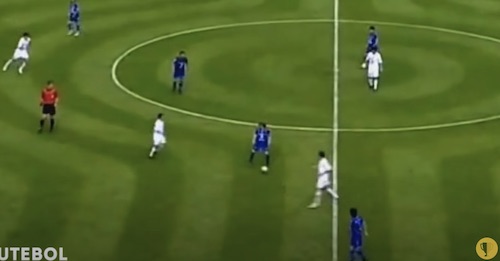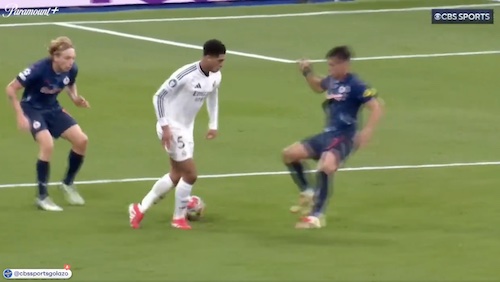








What is Sergio Busquets’ signature move? It is the sole pull-back. Busquets puts the bottom of his foot on top of the ball, rolls it back away from the defender who is pressing him, and then pushes it into open space with the inside of his foot. It looks almost too simple, yet for years at Barcelona he used it to slip past pressure again and again, even against world-class midfielders like Andrea Pirlo.
If you came here looking for a Sergio Busquets celebration, you will not find a famous one. Busquets rarely scored and was never known for a trademark goal celebration. His “signature” was the way he kept the ball under pressure, and that is exactly the part of his game every young midfielder should learn.
Who Is Sergio Busquets?
Busquets came through Barcelona’s academy and made his first-team debut in 2008, during Pep Guardiola’s first season as head coach. Over the next decade and a half he became the anchor of the Barcelona midfield alongside Xavi and Andrés Iniesta, winning multiple La Liga and Champions League titles. With Spain, he won the 2010 World Cup and Euro 2012. In 2023 he left Barcelona and joined Inter Miami in Major League Soccer, reuniting with Lionel Messi.
What made Busquets stand out was how simple he made the game look. He was tall and slim, not especially fast, and not a goal scorer. But he read the game brilliantly, played at his own pace and almost never seemed rushed. Everyone around him looked like they were going a hundred miles an hour while he was in slow motion.
He summed up his role well: “I play in a position that demands hard work and generosity and little glamour, but I like it. It’s my job and I like it. I would rather intercept and steal 10 balls than shoot. That’s what I’m here for, to make everyone else’s jobs easier.”
Busquets’ Signature Move: Why the Pull-Back Works
The pull-back is effective because of timing. Busquets waits for the defender to commit, usually stepping in toward the ball. At that moment, the ball disappears backward and to the side. The defender’s weight is going forward, so they cannot change direction quickly enough, and Busquets has a new passing lane or a clear path forward.
It works best for a holding midfielder because pressing players often run straight at you from in front. A quick pull-back and push turns their energy against them. It also helps that Busquets almost always knew what he wanted to do before the ball arrived, so one move was all he needed.
How to Do the Busquets Pull-Back: Step by Step
- Scan before you receive. Look over both shoulders so you know where the pressure is coming from and where the space is.
- Receive with an open body. Take the ball on the half-turn when possible so you can see more of the field.
- Invite the defender. Keep the ball close and slightly in front of you. Let the defender believe they can win it.
- Sole on top. As the defender steps in, place the sole of your foot on the top of the ball.
- Roll it back and across. Pull the ball back and slightly to the side, away from the defender’s leg. Keep your body between the defender and the ball.
- Push into space. With the inside of the same foot or the other foot, push the ball into the space the defender just left.
- Play forward. Lift your head and pass or dribble. The move is only valuable if it leads to something positive.
A Variation: Pull-Back and Turn
Busquets also used the sole to roll the ball across his body and turn away from pressure completely. Instead of pushing the ball forward, pull it back, pivot on your standing foot and play out the other side. This is useful when the defender is behind you or on your shoulder.
Common Mistakes
- Doing it too early. If the defender has not committed, they can simply follow the ball. Wait for them to step in.
- Stepping on the ball too hard. Press too firmly and the ball stops dead or you trip over it. Use a light touch with the sole.
- Pulling the ball straight back. A straight pull-back leaves the ball in the defender’s path. Pull back and slightly across.
- Not scanning first. Without knowing where the space is, the pull-back becomes a guess.
- Using it every time. Busquets mixed it with one-touch passes. Predictable players are easy to press.
- Looking at the ball after the move. Get your head up immediately to find the next pass.
Practice Session: The Busquets Pull-Back (About 35 Minutes)
- Sole rolls warm-up (6 minutes). Stationary sole rolls side to side, then forward and back, alternating feet. Work in 30-second sets with short rests.
- Cone pull-backs (8 minutes). Dribble toward a cone, pull the ball back as you reach it, and push away at an angle. Ten reps with each foot.
- Passive defender (8 minutes). A partner jogs toward you as you receive a pass. Wait for them to reach for the ball, then pull back and push past. Switch every five reps.
- Midfield pressure box (10 minutes). In a 15×15 yard box, a midfielder receives from a server with one defender pressing. The midfielder must escape pressure and pass to a target player on the opposite side. Rotate roles every two minutes.
- Cool down and reflection (3 minutes). Light juggling and stretching. Ask players when the pull-back worked best and why.
The Coerver Angle
Busquets is a reminder that skill does not have to be flashy. At Coerver Coaching we teach ball mastery and simple, effective moves first because they work in real games. Sole rolls and pull-backs are part of a player’s everyday toolbox, and when they are repeated until they are automatic, players can keep the ball under pressure, protect it and play forward with confidence. Busquets turned one basic move into a weapon by perfecting its timing, which is exactly how we want young players to think about their 1v1 skills.
To learn more about the Barcelona way, read The Art of Sergio Busquets, our guide on how to play like Xavi, and an explanation of tiki taka football, the style Busquets helped make famous.
Frequently Asked Questions
What is Sergio Busquets’ signature move?
The sole pull-back. He rolls the ball back with the bottom of his foot as a defender steps in, then pushes it into the space the defender has left.
Does Sergio Busquets have a famous celebration?
No. Busquets was a defensive midfielder who scored rarely, and he is not known for a signature goal celebration. He is remembered for his positioning, calm passing and ability to escape pressure.
What position did Busquets play?
He was a defensive midfielder, often called a “pivot.” His job was to protect the back line, win the ball back and start attacks with simple, accurate passing.
Is the pull-back a good move for young players?
Yes. It is one of the first moves young players should learn because it helps them protect the ball, change direction and escape pressure without needing to be fast.