






The stop and go soccer move is one of the simplest and most effective ways to beat a defender. You dribble slowly, stop the ball for a split second, and then burst away at full speed. The defender stops with you, and by the time they react to your restart, you are already gone. It requires no fancy footwork, which is why it is a great move for youth players of every level.
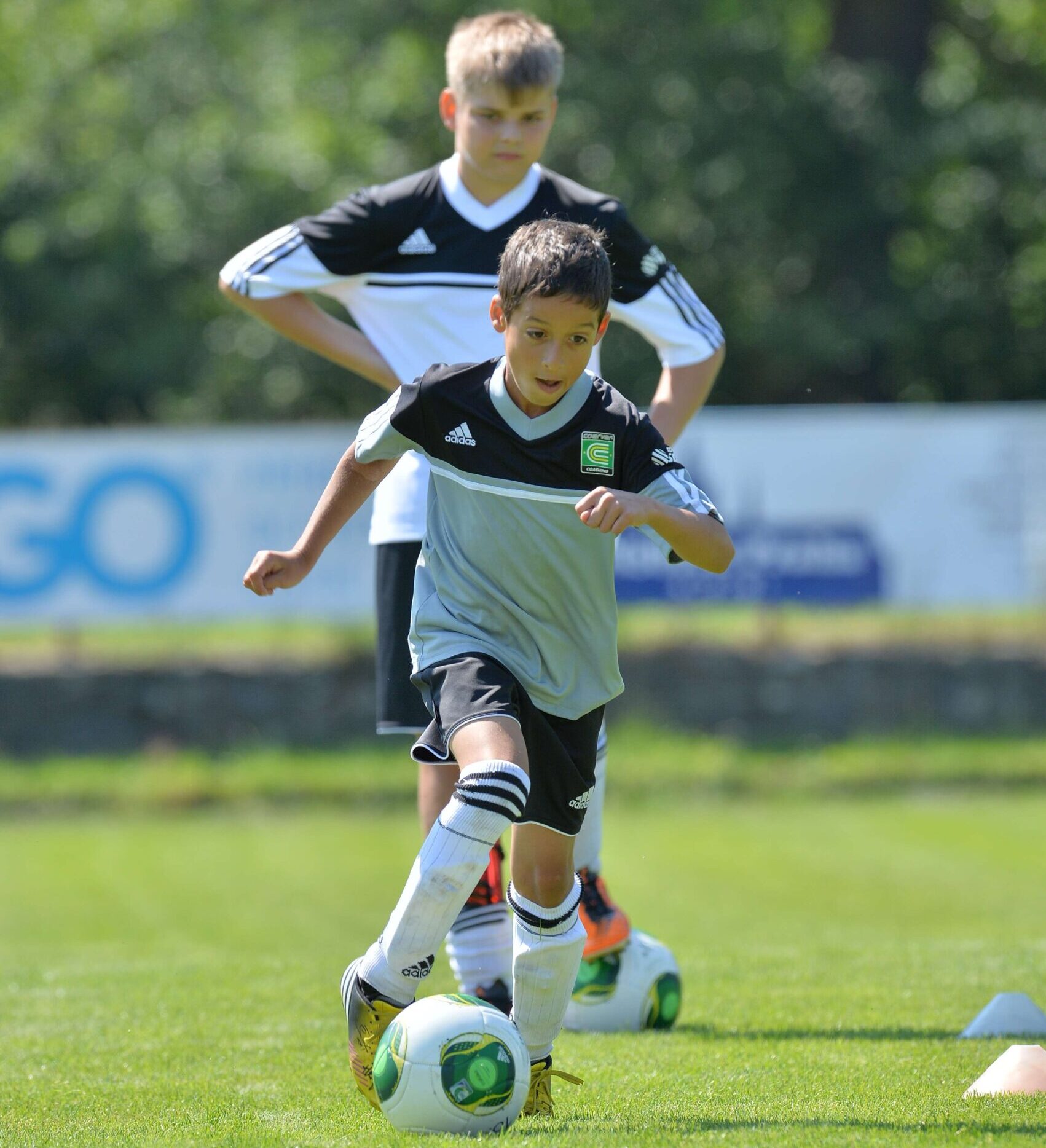
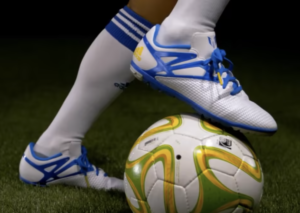
Change of pace is the key to the stop and go move. You are not trying to trick the defender with your feet. You are tricking them with your speed. Jog with the ball, usually when a defender is running alongside you, stop, and then explode past. Many players also put the sole of their foot on top of the ball when they stop, then push it forward with the laces or instep as they accelerate away.
Why the Stop and Go Move Works
Defenders mirror the attacker. When you slow down, they slow down. When you stop, they stop. That moment when both players are standing still is the attacker’s advantage, because only the attacker knows when the restart is coming. A defender has to see you go, then react, then accelerate. That half-second head start is often all you need.
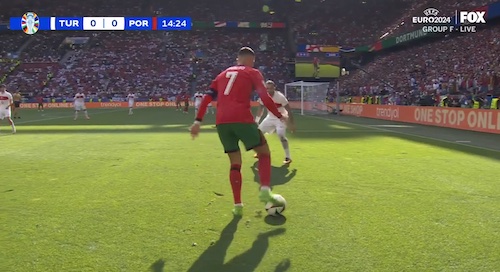
The move is especially useful when a defender is running beside you down the sideline, a common situation for wingers and outside backs. Instead of trying to outrun the defender from a standing start, you use the stop to reset the race on your terms.
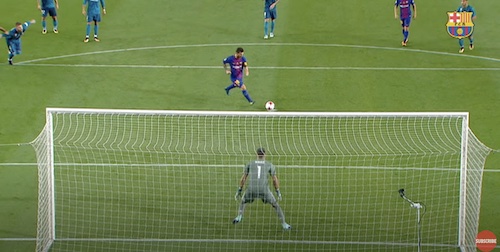
You will see the very best dribblers in the world use versions of the stop and go. Lionel Messi is famous for walking, slowing down and then suddenly exploding past opponents. It is not about being the fastest player on the field. It is about being the fastest from a stop, at the moment you choose.
How to Do the Stop and Go Soccer Move: Step by Step
- Dribble at a controlled pace. Jog with the ball close to your feet, with the defender beside you or slightly behind. Do not start at top speed, or there is nothing left to change.
- Keep the ball on your outside foot. Dribble with the foot farthest from the defender so your body shields the ball.
- Stop the ball. Place the sole of your foot on top of the ball to stop it dead. Keep your body between the defender and the ball.
- Sell the stop. Straighten up slightly and pause, as if you are looking for a pass. The defender should believe the run is over.
- Explode. As soon as the defender slows or stops, push the ball forward with the laces or instep and sprint. Your first two or three steps should be your fastest.
- Get across the defender. If you can, cut slightly in front of the defender’s path after you accelerate so they cannot recover without fouling you.
- Look up and finish the play. Once you are free, lift your head to cross, pass or shoot.
Stop and Go Variations
Once players have the basic move, they can add variations. The fake stop: lift your foot as if to stop the ball, but do not touch it, and accelerate immediately. The stop and turn: stop the ball and, instead of going forward, roll it back and turn the other way. The double stop: stop, take a small touch, stop again, then explode. These variations keep defenders guessing and make the basic stop and go even more effective.
Common Mistakes
- No real change of pace. If you dribble fast, stop, and go at the same speed, the defender is not fooled. Slow before, explosive after.
- Stopping too far from the defender. If there is too much space, the defender has time to recover. Use the move when they are close.
- Stopping the ball on the wrong side. If the ball is on the side closest to the defender, they can simply poke it away.
- Pausing too long. A long stop lets the defender reset or call for help. A split second is enough.
- A weak first touch on the restart. Too small a push and you will run into the ball. Too big and the defender can step in. Push it a few yards into space.
- Looking at the ball the whole time. Watch the defender so you know exactly when they stop.
Youth Soccer Stop and Go Drill (About 45 Minutes)
This stop and go drill works for players from about age 7 up. Adjust the distances and the level of defending for younger groups.
- Red light, green light warm-up (6 minutes). Every player has a ball. On “red,” stop the ball with the sole. On “green,” explode for five yards. Mix in “yellow” for a slow dribble.
- Cone line stop and go (8 minutes). Set cones every 10 yards in a line. Jog with the ball to each cone, stop the ball with the sole, then explode to the next cone. Three trips with each foot.
- Shadow partner (8 minutes). In pairs, the defender jogs beside the attacker without tackling. The attacker performs the stop and go and tries to gain a two-yard lead. Switch roles every four reps.
- 1v1 sideline channel (10 minutes). In a channel about 10 yards wide and 30 yards long, the attacker starts side by side with a live defender and tries to dribble over the end line using the stop and go. Rotate every rep.
- Small-sided game (13 minutes). Play 3v3 or 4v4. Award a bonus goal if a player beats a defender with a stop and go before scoring.
The Coerver Angle
The stop and go is a perfect example of what Coerver Coaching calls a move to beat an opponent. It combines ball mastery, stopping the ball cleanly with the sole, with speed, the explosive restart. We teach young players that moves are not just about fancy footwork. Change of pace and change of direction are the real weapons in a 1v1. When players repeat simple moves like this until they are automatic, they gain the confidence to take on defenders in real games.
To build on this skill, study Lionel Messi’s change of pace, learn more Coerver soccer moves to beat any opponent, and explore the angles of beating a defender in Dribbling Geometry.
Frequently Asked Questions
What is the stop and go move in soccer?
It is a dribbling move where you slow down, stop the ball briefly, often with the sole of your foot, and then accelerate past the defender. It works because the defender stops with you and reacts late when you restart.
Is the stop and go move good for beginners?
Yes. It is one of the best first moves for young players because it uses simple skills, stopping the ball and running with it, and teaches the importance of change of pace.
When should I use the stop and go?
Use it when a defender is running beside you, especially down the sideline. It is less effective when the defender is far away or directly in front of you.
Is it called stop and go in football too?
Yes. In countries where soccer is called football, the same move is often called the stop and go football skill or simply a change of pace move.