



A self pass in soccer is a deliberate first touch that pushes the ball a few yards into space so you can run onto it, instead of stopping the ball dead at your feet. In other words, you pass the ball to yourself. It is one of the most underrated skills in the game because it turns a pressured reception into a chance to face up, turn, or attack.
When a pass is coming to you and you can feel a defender closing you down, a self pass lets you control the ball slightly further away from the pressure than normal. That bigger touch buys you time and space to turn and face the defender, or to open up and see the whole field.
What Is a Self Pass and Where Does It Come From?
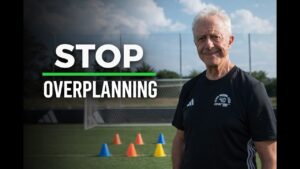
In the video above, coach Michelle French demonstrates the self pass for Eastside FC, a youth club in Washington state. She receives the ball and, rather than trapping it tightly, guides it a short distance into open space with her first touch. That small “self-pass” gives her working room before the defender can get tight.
The idea is simple, but it changes how players think about receiving. Many young players are taught to stop the ball completely. That is a fine starting point, yet against an opponent who is closing fast, a dead ball at your feet is easy to steal. A self pass keeps the ball moving and keeps you moving with it.
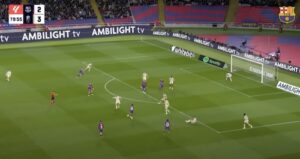
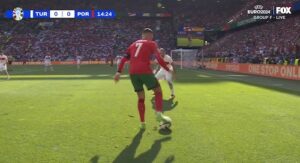
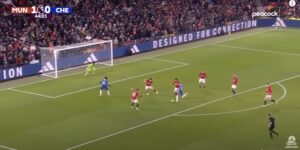
Top players do this constantly. Watch any high-level midfielder receive in space and you will often see a directional first touch that pushes the ball away from pressure and into their next action. Coaches sometimes call it a “touch out of your feet” or a “positive first touch.” It is the same idea.
When to Use a Self Pass
- A defender is closing from one side. Push the ball away from them into the open side.
- You have space in front of you. Push it forward and attack the space at speed.
- You want to turn and face the defender. Take the ball slightly out in front so you can set up a 1v1 move.
- You need to switch the point of attack. A touch across your body opens up the far side of the field.
How to Do the Self Pass: Step by Step
- Scan before the ball arrives. Look over your shoulder to see where the defender is and where the space is. The self pass only works if you already know where you are going.
- Get your body open. Stand side-on so you can see both the passer and the field.
- Choose the surface. Use the inside of the foot for most self passes. The outside of the foot is great for pushing the ball away from a defender on your other side.
- Meet the ball, do not stop it. Keep your ankle firm and guide the ball one to three yards into space. The touch should be bigger than a normal cushion or trap, but not so big that you lose it.
- Move with the ball. Step after it right away. A self pass is a touch and a run, not a touch and a pause.
- Finish the action. From there, you can dribble forward, pass, or use a move such as a step over turn or a pull back to face the defender and open up the field.
How big should the touch be?
It depends on the space and the pressure. If the defender is close, a one to two yard touch away from them is enough. If there is a big open area ahead, you can push it further and run. The rule of thumb: the ball should always end up closer to you than to the nearest defender.
Common Mistakes
- Touching it too far. A loose self pass becomes a pass to the defender. Control the weight.
- Pushing the ball toward the pressure. Always guide the ball away from the defender, not into their path.
- Not scanning first. Without information, players default to stopping the ball, or they push it into trouble.
- Standing still after the touch. The touch and the first step should happen together.
- Using only the dominant foot. Defenders will learn which way you always go. Practice both feet and both directions.
Practice Session: Self Pass Training
This 30-minute session works with one ball between two players and a few cones.
- Wall or partner passing (6 minutes). Pass and receive from 10 yards. On every reception, take a self pass to the left or right, then pass back. Alternate feet each time.
- Gate drill (6 minutes). Set two cone gates, one on each side of the receiver, about three yards away. The receiver must take the first touch through either gate. Do 10 reps each, then switch roles.
- Coach call (6 minutes). As the ball travels, the partner shouts “left” or “right.” The receiver self passes that way. This trains quick decisions and both feet.
- Passive defender (6 minutes). Add a defender who closes from one side as the pass is played. The receiver self passes away from the pressure and dribbles through an end line. 8 reps each, then rotate.
- 3v1 or 4v2 rondo (6 minutes). Award a bonus point for any receive with a clean self pass that leads to a completed pass.
The Coerver Angle
The self pass sits right at the heart of how Coerver Coaching develops players. A good first touch is really a ball mastery skill: the more comfortable players are with every surface of the foot, the more confidently they can guide the ball into space under pressure. We build that comfort through repetition, then link the first touch to 1v1 moves such as turns and changes of direction, so the reception and the move become one action. Players who can receive and go forward in one motion are far harder to defend.
To keep building your game, try the Barcelona solo control drill, learn the Robinho step over, and explore more soccer turns and cuts you can use after your self pass.
Frequently Asked Questions
What does self pass mean in soccer?
It means using your first touch to push the ball into space so you can run onto it, rather than stopping the ball at your feet. You are essentially passing the ball to yourself to escape pressure or attack open space.
Can you pass to yourself from a free kick or throw-in?
No. On a restart such as a free kick, corner kick, or throw-in, the player who takes it cannot touch the ball again until another player has touched it. Doing so gives the other team an indirect free kick. In field hockey, by contrast, a “self-pass” is an official way to restart play, which is why the term sometimes shows up in hockey rules.
Is a self pass the same as a first touch?
It is a type of first touch. Every self pass is a first touch, but not every first touch is a self pass. A self pass is specifically a directional touch into space.
What age should players learn the self pass?
Players can start as soon as they can control a pass, often around U8 to U10. Begin without pressure, then add a defender once the touch is consistent.