

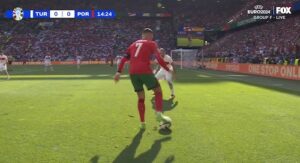






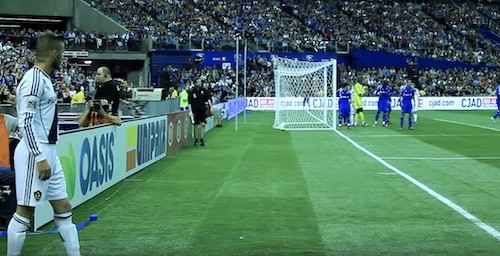
Can you score directly from a corner kick? Yes. Under the Laws of the Game, a goal can be scored directly from a corner kick, but only against the opposing team. If the ball curls straight from the corner into the net without anyone touching it, the goal counts. It is rare and difficult, which is why fans get so excited when they see one.
To score from a corner kick, you need to wrap the inside of your foot around the ball to put heavy bend on it, so it swings out and then back in toward goal. Combine that curl with pace, and a crowded goal area makes it even harder for the goalkeeper to deal with. It is a goalkeeper’s worst nightmare.
Can You Score From a Corner Kick? The Olympic Goal
A goal scored directly from a corner kick is often called a “gol olímpico,” or Olympic goal. The name dates back to 1924, when Argentina’s Cesáreo Onzari scored directly from a corner against Uruguay, who had just won the Olympic soccer tournament. The rule allowing goals straight from corners had only recently come in, and the nickname stuck.
Since then, many great strikers of the ball have done it. Megan Rapinoe scored one for the United States against Canada at the 2012 Olympics. The video above shows a collection of some of the best corner kick goals in world soccer.
Why corner kick goals happen
Most direct corner goals come from a combination of factors: a ball with lots of bend and pace, a goalkeeper crowded by players in the six-yard box, wind or wet conditions, and sometimes a keeper who misjudges the flight. If there is no defender guarding the near post, there is even more reason to try it.
Scoring directly from a corner kick is far from easy. WIRED’s Robbie Gonzalez put on his shin guards to explore the mix of science and skill behind the rare Olympic goal in this video.
How to Score From a Corner Kick: Step by Step
- Use the right foot for the side. For an inswinging corner, a right-footed player takes from the left side of the field (as you face the goal) and a left-footed player takes from the right. The ball will naturally curl toward goal.
- Place the ball smartly. Set the ball in the corner arc where you have a clean run-up and your foot can get underneath and around it.
- Approach at an angle. Take a curved run-up of four to six steps so your hips can open up and swing across the ball.
- Plant your standing foot slightly behind and beside the ball. This gives room to wrap your foot around it.
- Strike the outer half of the ball with the inside of your foot. Contact low and on the side of the ball away from the goal. This creates the spin that bends the ball back in.
- Swing across your body. Follow through across your standing leg, finishing with your kicking foot pointing across the field. That is what generates the bend.
- Add pace. Bend alone is not enough. Strike the ball firmly so the goalkeeper has little time to react. Aim for the space just under the crossbar at the near post or into the middle of the goal.
Common Mistakes
- Not enough bend. The ball sails across the face of goal and out of play. Wrap your foot around the ball more.
- Not enough pace. A slow, floating ball is easy for the goalkeeper to catch.
- Leaning back. This sends the ball too high and over the crossbar.
- Using the wrong foot for the side. An outswinger from the wrong side will curl away from goal, not toward it.
- Only aiming for the goal. A direct goal is a bonus. The best corners are dangerous whether a teammate touches the ball or not.
Practice Session: Corner Kick Goals
This 30-minute session works best with a full-size goal and, ideally, a goalkeeper.
- Bending warm-up (6 minutes). With a partner 15 to 20 yards apart, practice curling passes with the inside of the foot around a cone placed between you. 10 reps each foot.
- Unopposed corners (8 minutes). Take 10 corners from each side, aiming to land the ball on or under the crossbar. Notice where the ball starts and how much it curls.
- Corners with a goalkeeper (8 minutes). Add a goalkeeper and take 8 corners per side. Mix target areas: near post, center of goal, and back post.
- Corners with traffic (8 minutes). Add three or four players in the six-yard box to crowd the goalkeeper, as in a real game. Take 6 corners per side and score a point for any direct goal or any touch on goal from a teammate.
The Coerver Angle
At Coerver Coaching, we believe set-piece quality grows out of everyday ball mastery. Players who spend time striking the ball with every surface of the foot develop the feel needed to bend a corner on purpose rather than by accident. We encourage young players to experiment in practice with curl, pace, and height, because that technical freedom is what produces players who can change a game with one strike.
For more set-piece ideas, read about whether to raise your hand when taking corner kicks, learn proper crossing technique and drills, and enjoy the trick corner kick by Wayne Rooney and Ryan Giggs.
Frequently Asked Questions
Can you score directly from a corner kick?
Yes, a goal may be scored directly from a corner kick, but only against the opponents. If the kicker somehow sends the ball directly into their own goal, the opponents are awarded a corner kick instead.
Can you score directly from a goal kick?
Yes. Under the Laws of the Game, a goal kick can go directly into the opponents’ goal, so a goalkeeper can technically score from one. It almost never happens on a full-size field, but it is legal. An own goal directly from a goal kick is not allowed; the opponents get a corner kick instead.
Do you have to raise your hand before taking a corner?
No. Raising a hand is a signal to teammates, not a rule. Many players use it, and many do not.
What is the best technique for scoring from a corner?
Take an inswinging corner with your stronger foot, wrap the inside of your foot around the outer half of the ball, and strike it firmly so it bends toward the near post or the middle of the goal.