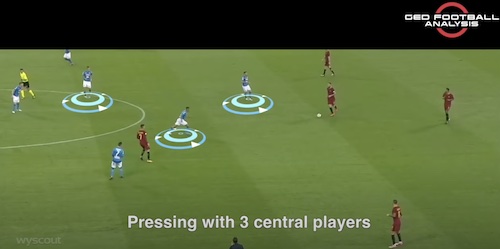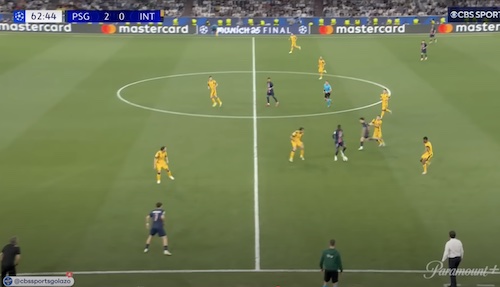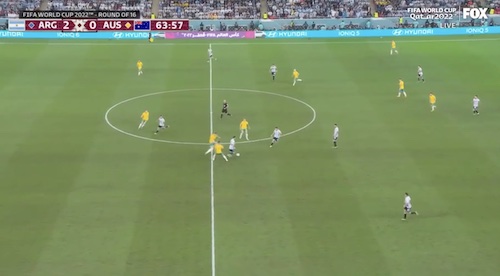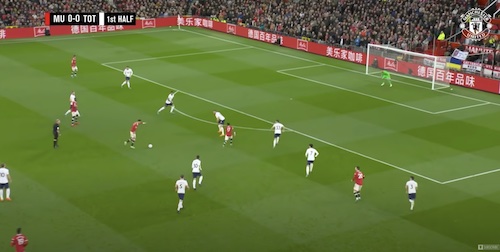









A high press means defending close to the opponent’s goal to win the ball back early; a low block means dropping deep, staying compact and protecting your own penalty area. Neither is “right.” The best teams, including both 2026 World Cup finalists, choose the approach that fits their players, the opponent and the moment in the game.
The 2026 World Cup Final: Two Defensive Ideas
The final between Spain and Argentina was a clean contrast. In its tactical preview of the final, FIFA’s Technical Study Group described Spain pressing intensely with compact lines while prioritizing protection of the central channel. Going into the final they had conceded just one goal in seven matches and allowed the fewest attempts on target in the tournament.
Argentina, by contrast, defended in a low block, with nine outfield players working hard behind the ball while Lionel Messi was often spared defensive duties so he could stay fresh as the outlet. Spain won 1-0 after extra time, but Argentina’s approach took them all the way to the final.
FIFA’s post-tournament report drew the bigger conclusion: from aggressive high presses to disciplined low blocks and rapid transitions, there was no single winning formula.
The Three Main Defensive Blocks
High press
The team defends in the opponent’s half, pressing the goalkeeper and defenders to force mistakes.
- Strengths: Wins the ball near goal, keeps the opponent under pressure, suits fit and aggressive teams.
- Risks: Leaves space behind the defensive line, demands energy, and one broken press can expose the team.
Mid block
The team sets up around the halfway line, letting the opponent have the ball in its own half but pressing once it enters the middle third.
- Strengths: Balanced, protects space behind, conserves energy.
- Risks: Can feel passive if the pressing triggers are not clear.
Low block
The team drops deep, often with two compact lines, and protects the penalty area.
- Strengths: Very little space behind, hard to break down, sets up counter-attacks into open space.
- Risks: Invites pressure and crosses, and the ball is won far from the opponent’s goal.
World Cup debutants Cabo Verde showed how effective a compact block can be. FIFA highlighted their compact defending, collective organization and proactive goalkeeper. They took Argentina to extra time in the Round of 32 before losing 3-2.
How to Choose
Coaches at older levels weigh several questions:
- Our players: Do we have quick, fit players who enjoy pressing, or are we better protecting space?
- The opponent: Do they build out patiently from the goalkeeper (a press can disrupt them) or play direct (a deeper line may be safer)?
- Game state: Protecting a lead late on often means dropping deeper; chasing a goal means pressing higher.
- Conditions: Heat, altitude and fixture congestion all affect how long a team can press.
What This Means for Youth Teams
For young players, team blocks come second to individual defending. A child who cannot press one opponent well cannot be part of a team press. Start with 1v1 defending: approach speed, body shape, staying on the feet. Our article on defenders putting hands behind their backs explains one modern detail.
A strong rule of thumb for under-12 teams: avoid “parking the bus.” A permanent low block may win games, but it robs players of 1v1 duels, quick decisions and the chance to win the ball high. Let young teams press, make mistakes and learn. From around 13 upward, teach all three blocks so players understand when to use each. For broader team ideas, see Think on Your Feet: Soccer Strategy and Tactics.
A Progressive Defending Practice
This 75-minute session suits U13 to U17 teams.
Activity 1: 1v1 to 2v2 Pressure and Cover (15 minutes)
Set-up: 15×20-yard channels with a small goal at each end.
Organization: Start 1v1. The defender passes to the attacker and closes down. After five minutes, play 2v2 so the second defender learns to cover.
Coaching points: Close quickly, slow down as you arrive, side-on stance, show the attacker one way. Cover player at an angle behind, close enough to help.
Progression: Add a third attacker as a joker to create 3v2 overloads.
Activity 2: Shape and Shift (15 minutes)
Set-up: Half field. Six defenders in two lines of three against six attackers who pass around the outside.
Organization: Attackers move the ball slowly at first. Defenders slide together as a unit, keeping distances short between and within the lines.
Coaching points: Shift as the ball travels, keep the center protected, communicate constantly.
Progression: Allow attackers to play into the block and shoot.
Activity 3: Pressing Triggers Game (20 minutes)
Set-up: Two-thirds of a field. Goalkeeper and four defenders against five pressers, with two counter goals at halfway.
Organization: The build-out team starts with the keeper and scores through the counter goals. Pressers score in the big goal.
Coaching points: Press together on triggers (a backward pass, a poor touch, a player receiving facing his own goal, a pass to the sideline). Curve your run to cut off one side.
Progression: Make it 4v4 plus keeper so the press must choose whom to leave free.
Activity 4: Call-the-Block 8v8 (25 minutes)
Set-up: 70×50-yard field, goalkeepers, two cones marking thirds.
Organization: The coach calls “High,” “Mid” or “Low” each time the ball goes out. The defending team must set up in that block. Later, the captain makes the call.
Coaching points: Fast recovery into shape, compact distances, clear communication about when to step up.
Progression: Give each team a “game state” (winning 1-0, losing 1-0) and let them choose.
Frequently Asked Questions
What is a low block in soccer?
A defensive approach where the team drops deep near its own penalty area, staying compact to deny space in front of and behind the defense.
Is a high press better than a low block?
Not automatically. FIFA’s 2026 World Cup report concluded there was no single winning formula. Spain won with intense pressing, while Argentina reached the final defending in a low block.
Should youth teams play a high press?
Young teams benefit from pressing because it creates more 1v1 duels and decisions. Teach individual defending first, then add group and team pressing as players mature.
Coach it with your own team.
The Coerver Session Planner gives youth coaches ready-made practice sessions built on the Coerver method: fun, organized and packed with touches on the ball.