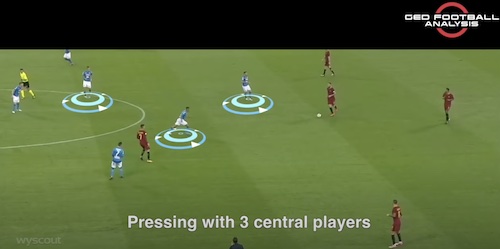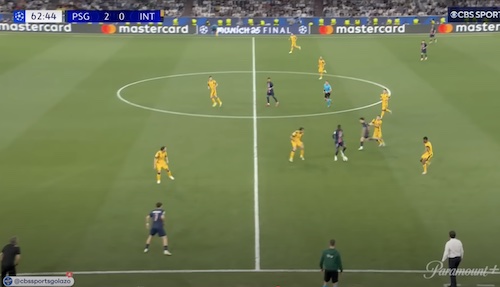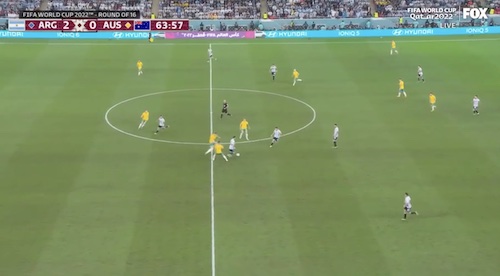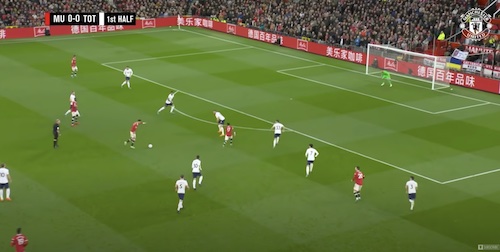









The best soccer transition drills train players to do one thing: turn a ball recovery into a forward attack within seconds, before the opponent can reorganize. That means a quick first look forward, fast support runs and the judgment to know when to go and when to keep the ball. Below are the principles behind great attacking transitions and a four-step practice to build them.
Why Transitions Decide Games
When a team loses the ball, its players are spread out in attacking positions. For a few seconds, the space behind them is open. Teams that recognize that moment and attack it create some of the best chances in the game.
The 2026 World Cup reinforced the point. FIFA’s post-tournament technical report listed attacking transitions among its key tactical themes and noted that champions Spain used their shape to win the ball back and attack before opponents could reorganize. FIFA’s Technical Study Group also reported that winning teams regained the ball about four seconds faster than losing teams.
In its preview of the final, FIFA observed that Spain provided options in transition quickly once the ball was won back, while Argentina pressed immediately to win the ball and transitioned quickly, often into wide areas. Debutants Cabo Verde, praised by FIFA for compact defending and good transition play, took Argentina to extra time in the Round of 32 before losing 3-2.
Five Principles of the Attacking Transition
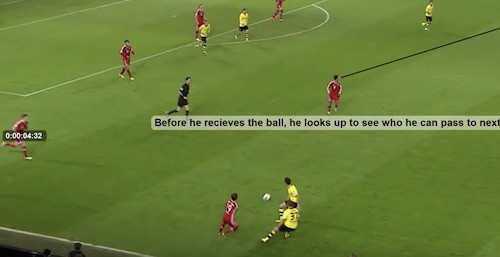
- Look forward first. The first thought after winning the ball should be “Can we go now?” A pass or dribble into the space behind the opponent is the most valuable action available.
- Secure the ball if you must. If the winner of the ball is under pressure or facing their own goal, a safe first pass out of pressure comes before the killer ball. Losing it again immediately wastes the recovery.
- Explode into support. Teammates must react the instant the ball is won. One player runs beyond, one offers a short option, one gives width.
- Attack with speed and few touches. Transitions are about tempo. Dribble at speed into space, pass early, and finish before defenders recover.
- Know when to slow down. If the opponent has recovered numbers behind the ball, keep possession and build. Forcing a lost cause gives the ball straight back.
The Youth Development Angle
Transitions reward exactly the qualities youth coaches want: confident dribbling at speed, quick decisions and a willingness to attack 1v1. A player who can run with the ball under control and beat an opponent is a transition weapon at any level. That is one reason the Coerver Coaching approach puts ball mastery and 1v1 confidence first.
Young players also need practice reading the moment. Small-sided games with clear transition rewards teach this far better than verbal instruction. Speed matters too, and our soccer speed drills from Coerver Coaching show how to train speed with the ball. For finishing quickly once the chance arrives, see the best striker training drills.
A Progressive Transition Practice
This 70-minute session works for U10 to U16 players. Scale the space and numbers to age.
Activity 1: 1v1 Turnaround Duels (10 minutes)
Set-up: 15×20-yard area, small goal at each end, players in pairs.
Organization: The attacker tries to score in the far goal. If the defender wins the ball, they immediately attack the opposite goal. Play 30-second rounds.
Coaching points: First touch forward after winning the ball, accelerate into space, shield if the opponent recovers.
Progression: Goals scored within five seconds of winning possession count double.
Activity 2: 3v2 to 2v1 Waves (15 minutes)
Set-up: 40×30-yard field with two goals and goalkeepers. Groups wait at each end.
Organization: Three attack two. When the attack ends, the two defenders plus a waiting teammate break the other way against two of the original attackers, creating a 2v1 or 3v2 in the other direction.
Coaching points: React instantly at the end of each attack, commit the defender before passing, run beyond the ball, finish quickly.
Progression: Add a recovering defender who sprints back from the halfway line.
Activity 3: 4v4 + 2 with Transition Bonus (20 minutes)
Set-up: 35×30-yard area, goals with keepers, two neutral wide players.
Organization: Normal 4v4 with the wide neutrals playing for the team in possession. A goal scored within eight seconds of winning the ball counts triple.
Coaching points: Scan before winning the ball so the first pass is ready, use the wide players to stretch play, support runs from behind the ball.
Progression: Remove the neutrals so players must create width themselves.
Activity 4: 7v7 Recover and Release (25 minutes)
Set-up: 60×40-yard field divided into thirds, goalkeepers in each goal.
Organization: Normal game. Winning the ball in the middle third and scoring within ten seconds earns two goals. Winning it in the attacking third and scoring earns three.
Coaching points: Decision on recovery (go now or secure first), runs beyond and wide, quick finishing. The team that lost the ball must recover goal-side fast.
Progression: Finish with a plain game and ask players to identify the transition moments themselves.
What to Watch For
- How many touches it takes your team to play forward after a recovery.
- Whether teammates sprint into support or wait to see what happens.
- Whether players can recognize when not to counter and keep the ball instead.
Pair this session with possession work so players learn both sides of the decision. Our neutral player in possession drill is a good complement.
Frequently Asked Questions
What is a transition in soccer?
A transition is the moment the ball changes possession. An attacking transition is when your team wins the ball and switches from defending to attacking; a defensive transition is the reverse.
How do you coach transitions to young players?
Use small-sided games where possession changes often, and reward goals scored quickly after winning the ball. Keep instructions simple: look forward, support quickly, finish fast.
Should my team always counter-attack after winning the ball?
No. If the opponent already has numbers behind the ball, it is usually better to keep possession and build. Good transition teams know when to go and when to slow down.
Coach it with your own team.
The Coerver Session Planner gives youth coaches ready-made practice sessions built on the Coerver method: fun, organized and packed with touches on the ball.