

To hit a knuckleball in soccer, strike the center of the ball with the hard, bony part of your instep, keep your ankle locked, and use a short, punchy follow-through so the ball leaves your foot with almost no spin. Without spin, the ball wobbles and dips in the air, and goalkeepers struggle to judge where it will end up.
Cristiano Ronaldo made the knuckleball famous, especially from free kicks. If you have ever wondered how Ronaldo kicks the ball so it moves like that, the answer is technique, not magic. This guide explains how to do a knuckleball in soccer step by step, the mistakes that stop it from working, and a practice session to build it.
What Is a Knuckleball in Soccer?
Most shots spin. A curled shot spins sideways, and a driven shot usually spins backward or forward. That spin keeps the ball’s flight fairly predictable. A knuckleball is struck so it has very little spin. The air around the ball becomes unstable, so the ball can swerve, wobble and drop late in its flight. The name comes from baseball, where a knuckleball pitch is thrown with almost no spin for the same reason.
For a goalkeeper, that is a nightmare. They set themselves for one flight path, and the ball moves at the last moment. Add pace, and there is very little time to react.
Ronaldo and the knuckleball
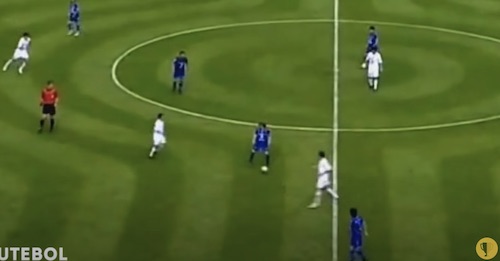
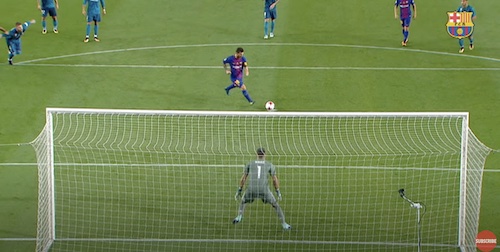
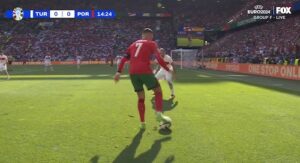
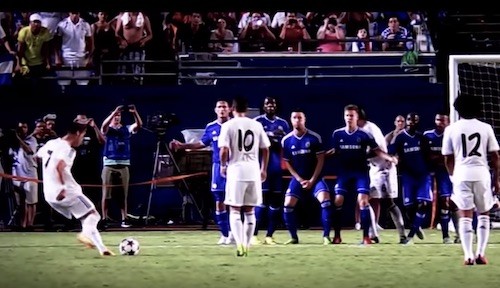
Cristiano Ronaldo became the best-known knuckleball shooter in the world during his years at Manchester United and Real Madrid. His free kicks, with the wide stance, the deep breath and the short, powerful strike, became one of the most copied routines in youth soccer. He was not the first to hit the ball this way. The Brazilian midfielder Juninho Pernambucano, who starred for Lyon, is widely regarded as one of the great masters of the technique. But Ronaldo brought it to a huge global audience, and many young players learned to knuckle the ball by copying him.
Ronaldo also combines the technique with power, which is why his best knuckleballs were so hard to save. Power is not the first step, though. Clean contact comes first.
How to Knuckle a Soccer Ball: Step by Step
- Set the ball and your run-up. Place the ball with the valve facing you if you like a consistent contact point. Take a few steps back and stand nearly straight behind the ball, not at a wide angle. A straight approach helps you hit through the center.
- Plant your standing foot beside the ball. Put it a few inches to the side, toes pointing at your target. Keep your body over the ball.
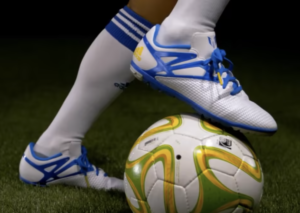
- Lock your ankle. Point your toes down and keep the ankle firm. A floppy ankle adds spin and loses power.
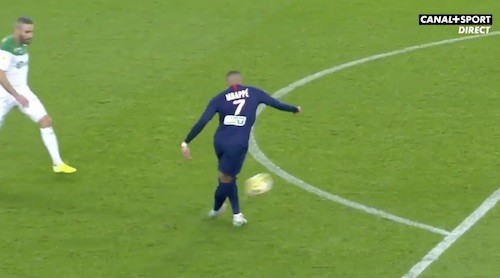
- Strike the center of the ball. Hit the middle of the ball, or slightly below the middle for more lift, with the hard part of the instep near the base of the big toe. Do not wrap your foot around the ball.
- Keep the follow-through short. Instead of swinging your leg across your body, punch through the ball and stop. Many players, including Ronaldo, land on their kicking foot after the strike.
- Stay steady. Keep your chest and head over the ball through contact to keep the shot down.
- Add power gradually. Once the contact is clean and the ball is moving, increase your run-up speed and strike harder.
Common Mistakes
- Hitting off-center. Striking the side of the ball adds spin and turns a knuckleball into a curler.
- Swinging across the body. A long, sweeping follow-through creates spin. Keep it short and straight.
- Leaning back. This sends the ball over the bar.
- Soft ankle. If the ankle gives at contact, you lose power and control.
- Chasing power too early. Blasting the ball before the technique is right builds bad habits.
- Expecting it every time. Even professionals do not knuckle every shot. Judge yourself on clean contact and a ball with little spin.
Practice Session: Knuckleball Shooting
This 35-minute session works for players around age 12 and up. Younger players can practice the contact at shorter distances with a lighter ball. You need a goal or wall, several balls and a few cones.
- Warm-up (5 minutes): Light jogging, dynamic stretches and short passing with the laces to feel the contact point.
- Wall contact (8 minutes): Stand about 10 yards from a wall. Strike the ball with a locked ankle and short follow-through. Watch the ball in flight. Is it spinning? Aim for 20 clean reps with little spin.
- Distance builder (8 minutes): Move back to 18 to 20 yards. Take 15 shots at goal, focusing only on center contact and stopping the follow-through.
- Free kick practice (10 minutes): From 22 to 25 yards, set up cones or mannequins as a wall. Take 12 to 15 free kicks. Rest between shots so every strike is high quality.
- Pressure finish (4 minutes): Count goals from 10 attempts. Record your score so you can track improvement week to week.
The Coerver Angle
Coerver Coaching treats finishing as a skill built on the same foundation as everything else: ball mastery, repetition and confidence. The knuckleball is a great example. It depends on precise contact and balance, which come from thousands of touches on the ball. We teach players to master technique at low intensity first, then add speed, distance and pressure. Players who learn this way can shoot with any technique the game demands, whether that is a curler, a driven shot or a knuckleball.
For more shooting ideas, see the famous Roberto Carlos free kick, study Diego Forlán’s long-range shooting technique, and learn how to play like Cristiano Ronaldo.
Frequently Asked Questions
Why does a knuckleball move in the air?
Because it has very little spin. Without spin, the airflow around the ball becomes unstable, which causes it to wobble, swerve and dip unpredictably.
What part of the foot do you use for a knuckleball?
The hard, bony part of the instep, near the base of the big toe, with the ankle locked and toes pointed down.
How does Ronaldo kick the ball for his knuckleball free kicks?
He uses a straight approach, strikes through the center of the ball with his instep, and uses a short, powerful follow-through, often landing on his kicking foot.
Can young players learn the knuckleball?
Yes, but they should focus on clean contact at short distances first. Power and distance come later as strength and technique develop.