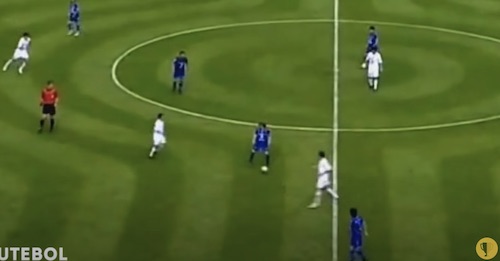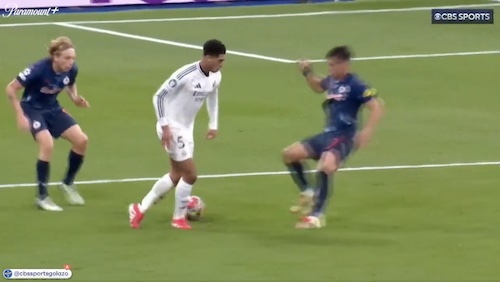
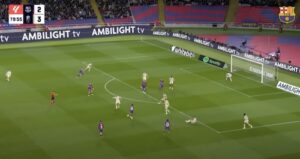
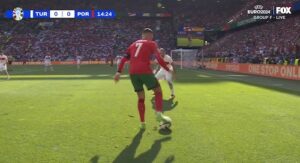



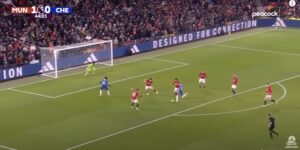
Juan Román Riquelme was a different kind of star. He wasn’t the fastest player on the field, and he rarely tried to beat defenders with pace. Instead, the Argentine playmaker controlled games with his first touch, his body, and an almost unreal sense of timing. Watch Riquelme’s skills and you’ll see the ball glued to his foot as he turns defenders inside out, uses his heel and sole, and waits for the perfect moment to pass.
For young players and coaches, Riquelme is one of the best examples of how technique and intelligence beat speed. Here’s what made him special and how you can train the same qualities.
Who Was Juan Román Riquelme?
Riquelme is a legend at Boca Juniors in Buenos Aires, where he won multiple league titles and Copa Libertadores trophies. He also played in Europe for Barcelona and Villarreal, where he led the club to the UEFA Champions League semi-finals in 2006, and he represented Argentina at the 2006 World Cup. He was a classic number 10: the player everything flowed through.
He also had to be patient as a young player. In his own words:
“I was a substitute for 2 years at U13, U14 as I was so small and skinny. They never played me. It’s weird because in the end, when the years go by and everyone is grown, the technically good players always end up having the advantage.”
That quote is a powerful message for every young player who is small for their age: keep working on your technique.
Riquelme’s Best Skills Explained
1. Shielding the ball
Riquelme used his body like a wall. He kept the ball on his far foot, arm out for balance, and let defenders bounce off him. It gave him time when others had none.
2. The pause
His most famous quality was slowing the game down. He would stop the ball with his sole, wait for the defense to move, then release the pass. The pause created space by drawing defenders in.
3. Sole rolls and drag-backs
Riquelme used the sole of his foot to roll the ball across his body or drag it back away from a tackle, a fundamental ball mastery skill at the heart of his game.
4. Heel nutmegs and back-heels
When defenders closed him down from behind, he’d use his heel to play the ball through their legs or round the corner to a teammate.
5. Turns under pressure
He’d receive with his back to goal, feel the defender, and turn away from pressure with one touch, often with the outside of his foot.
6. The killer pass
Everything led to the pass. Riquelme’s vision and weight of pass made him one of the best assist-makers of his generation.
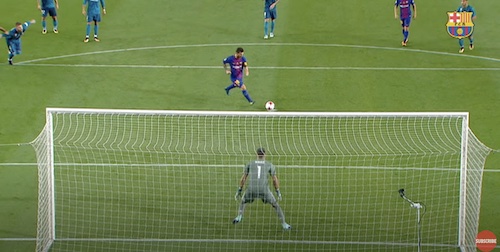
7. Free kicks
He was also a dangerous dead-ball specialist. See our Riquelme free kick lesson.
How to Train Like Riquelme
- Daily sole work (5 minutes): sole rolls across the body, drag-backs and pull-push touches, both feet.
- Shield and turn (5 minutes): With a partner applying light pressure from behind, receive a pass, shield for three seconds, then turn and pass to a target.
- The pause game (10 minutes): Play 3v2 in a small area. The player on the ball must stop it with the sole before passing at least once per possession. It teaches patience and scanning.
- Scan before you receive: Before every pass arrives, look over both shoulders. Riquelme always seemed to know what was around him because he checked before the ball came.
What Coaches Can Learn From Riquelme
Riquelme is proof that the “technically good players end up having the advantage,” exactly what we believe at Coerver Coaching. Our method starts with Ball Mastery for this reason. Small, skinny or late-developing players can still dominate games if they master the ball and learn to see the field.
Riquelme’s Playing Style in a Modern Game
People sometimes say a player like Riquelme couldn’t play today, because the game is too fast. I’d argue the opposite. The faster the game gets, the more valuable a player becomes who can keep the ball under pressure and pick the right pass. Modern playmakers still use the same tools: scanning, shielding, the first touch away from pressure, and patience. Riquelme just did it better than almost anyone.
Coaching Points From Riquelme’s Game
- Body before ball: get your body between the defender and the ball before you receive.
- First touch away from pressure: use the sole or outside of the foot to move the ball away from the defender.
- Look before you receive: know your next pass before the ball arrives.
- Slow is smooth: don’t rush. A half-second pause can open the whole defense.
Frequently Asked Questions
What position did Riquelme play?
He was an attacking midfielder, a classic number 10 playmaker.
Which clubs did Riquelme play for?
Mainly Boca Juniors, with spells at Barcelona and Villarreal in Spain, plus Argentinos Juniors at the end of his career.
What was Riquelme’s best skill?
Most coaches would say his ability to slow the game down: shielding the ball and pausing before releasing the perfect pass.
Want to pull off moves like these?
Coerver Moves breaks down the 1v1 moves the world’s best players use, step by step on video, so you can practise them at home and use them in games.