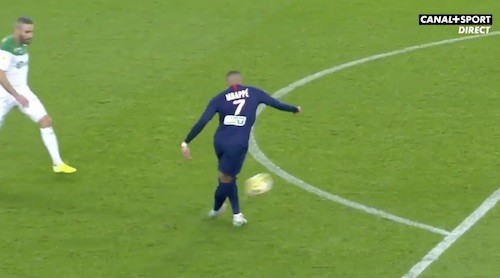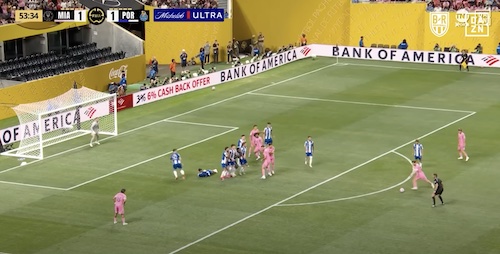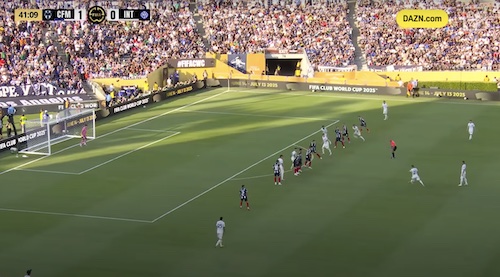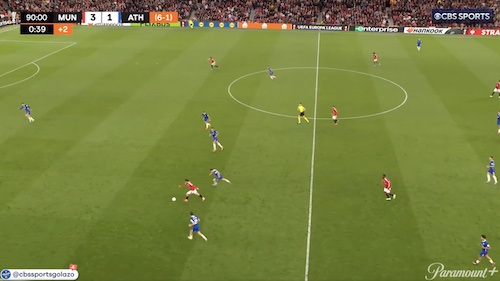
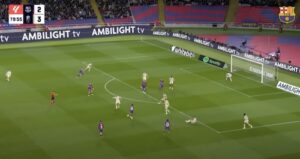
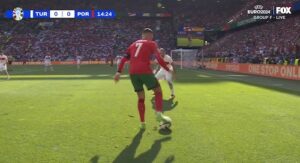



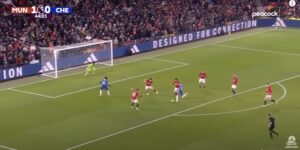

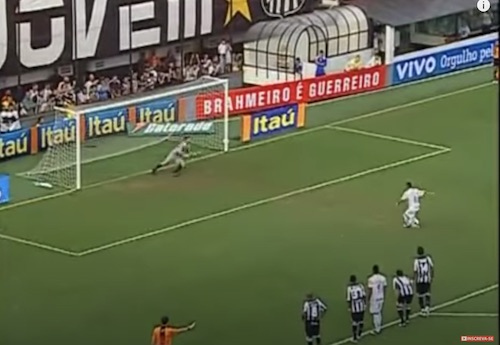
Paradinha means “little stop” in Portuguese. In soccer, it describes a penalty kick where the taker slows down or pauses in the run-up, waits for the goalkeeper to commit to one side, and then calmly places the ball the other way. Brazilian players made it famous. Pelé used it decades ago, and Neymar brought it back to the spotlight at Santos.
So is the paradinha legal? Yes, with one important limit. Since 2010, feinting during the run-up is allowed, but feinting to kick the ball once the run-up is complete is an offence. Below, I’ll explain the rule, how the technique works, and how young players can learn a composed, legal penalty routine.
What Does Paradinha Mean in Soccer?
The paradinha is a stutter-step or stop-start penalty. Instead of running straight through the ball, the taker:
- Approaches the ball at a normal pace.
- Slows down or hesitates just before the final steps.
- Watches the goalkeeper’s weight and hips.
- Places the ball into the side the keeper has moved away from.
It shifts the battle from power to patience. The taker isn’t guessing; they’re reacting to the goalkeeper.
Is the Paradinha Legal? The 2010 Rule Change
In 2010, the International Football Association Board (IFAB), which writes the Laws of the Game, clarified the rule ahead of that year’s World Cup. Feinting in the run-up to confuse the goalkeeper remains permitted. However, feinting to kick the ball once the player has completed the run-up is now an infringement, and the player is cautioned (shown a yellow card) for unsporting behaviour.
In practice, that means:
- Allowed: slowing down, changing pace or hesitating during the run-up.
- Not allowed: arriving at the ball, stopping, and faking a kick before shooting.
Referees judge this in real time, so a smooth, continuous stutter is far safer than a full stop at the ball.
Why the Paradinha Works
Goalkeepers facing a penalty have very little time. Many commit early to have a chance of reaching a well-struck shot. A taker who delays the final decision forces the keeper to move first. Then the taker simply passes the ball into the open space.
The risk is that a patient goalkeeper who stays still wins the duel, because the slow, placed shot is easy to save if the keeper hasn’t moved. That’s why the paradinha requires real composure and practice.
Famous Paradinha Penalties
Pelé is often credited with popularising the technique in Brazil. In recent years, Neymar’s stop-start penalties at Santos sparked the debate that led to the 2010 clarification, and players like Bruno Fernandes and Jorginho have become known for their own hop-and-wait penalty styles within the current rules.
How to Practise a Stutter-Step Penalty
- Master placement first. Practise side-foot penalties into both bottom corners until you can hit a target (a cone or a towel) eight times out of ten.
- Add a calm run-up. Take the same number of steps every time. Consistency builds confidence.
- Introduce a slight hesitation two or three steps before the ball, keeping your momentum moving forward.
- Read the keeper. Practise with a goalkeeper and focus on their hips, not their arms.
- Have a back-up plan. If the keeper doesn’t move, place the ball firmly into your pre-chosen corner.
Should Young Players Use the Paradinha?
For youth players, I recommend focusing on a reliable routine first: one run-up, one technique, two target corners. The paradinha is a great skill to add later, once a player has the touch, balance and confidence to strike the ball cleanly under pressure. Those qualities come from daily ball mastery, the same foundation behind every skill we teach at Coerver Coaching.
Want to see how the pros approach penalties more broadly? Read our guide to PKs in soccer and how the pros shoot them, and how Bruno Fernandes takes his penalties.
Paradinha vs Panenka: What’s the Difference?
The paradinha and the Panenka are both “cheeky” penalties, but they are different techniques:
- Paradinha: the taker hesitates in the run-up, waits for the keeper to move, then places the ball to the open side.
- Panenka: the taker runs up normally and softly chips the ball down the middle, betting that the keeper will dive. It’s named after Antonín Panenka, who scored this way to win the 1976 European Championship final for Czechoslovakia.
Both rely on the goalkeeper moving early. Both look brilliant when they work and embarrassing when they don’t, so they demand confidence and a lot of practice.
The Goalkeeper’s View: How Keepers Fight Back
Goalkeepers have adapted to stutter-step penalties. Many now stay upright for longer, delay their dive, or take a small step forward to narrow the angle (while keeping part of one foot on or in line with the goal line, as the Laws require). Against a patient keeper, the paradinha loses its advantage, which is why the best takers combine it with a strong, pre-chosen placement they can fall back on.
Frequently Asked Questions
What does “paradinha” mean?
It means “little stop” in Portuguese.
Is the paradinha banned?
Not completely. Feinting during the run-up is allowed. Feinting to kick once the run-up is complete is an offence and earns a yellow card.
What happens if a player breaks the rule?
Under the Laws of the Game, the kicker is cautioned. If the kick is scored it is retaken; if it is missed or saved, the defending team is awarded an indirect free kick.
Want to pull off moves like these?
Coerver Moves breaks down the 1v1 moves the world’s best players use, step by step on video, so you can practise them at home and use them in games.