










What Is a Wonderkid in Soccer?
A wonderkid is usually a teenager or very young professional who appears to be ahead of the curve. They may have outstanding ball control, confidence in 1v1 situations, quick feet, unusual composure, creative passing, explosive speed, or the rare ability to change a game with one moment of skill.
But here is the important part: a wonderkid is not just a young player who is good right now. A true wonderkid is a young player who looks capable of becoming something much bigger.
That is what makes the word so exciting in soccer.
The Definition of “Wonderkid” in Soccer
A wonderkid is a young soccer player who shows elite-level promise before reaching full maturity.
The term is often used for players who seem destined for the top level of the game. These players may already be playing professionally, starring in youth academies, representing national youth teams, or standing out in high-level competitions against older players.
A wonderkid usually has several of these qualities:
- Excellent technical ability
- Confidence on the ball
- Fast decision-making
- Creativity in tight spaces
- Strong 1v1 attacking ability
- Game intelligence beyond their age
- Physical or athletic qualities that separate them
- The mentality to keep improving
- A personality that wants the ball under pressure
The best wonderkids do not just look good when the game is easy. They still want the ball when the game gets faster, more physical, and more competitive.
Why the Word “Wonderkid” Captures the Imagination
Soccer fans love the idea of the next great player.
Every generation looks for the next star. The next creative number 10. The next explosive winger. The next calm center midfielder. The next fearless striker. The next defender who plays like a veteran at sixteen or seventeen years old.
That is why the word wonderkid has become so popular. It creates excitement. It suggests possibility. It makes people believe they are watching the beginning of a great soccer story.
But there is also a danger in the word.
Not every wonderkid becomes a superstar. Some are pushed too early. Some are overhyped. Some develop physically before others and then level off. Some get injured. Some lose confidence. Some never receive the right coaching environment. Some are judged too harshly before they have had time to grow.
A wonderkid is not a finished player. A wonderkid is a player with a special starting point.
So Many Players Could Be the Wonderkid in This World
The beautiful thing about soccer is that the next wonderkid could come from anywhere.
A futsal court. A street game. A local club. A school field. A backyard. A small academy. A country that does not usually produce global stars. A family with no soccer background. A player who was overlooked at thirteen but exploded at sixteen.
That is why so many players in this world could fit the idea of a wonderkid.
There are young players everywhere with special qualities. Some have incredible feet. Some have vision. Some have courage. Some have balance and change of direction. Some are natural goal scorers. Some are quiet players who see passes before anyone else. Some are defenders who read danger early and never panic. Some are late bloomers who simply need time, repetition, and the right coach to bring out their ability.
The world is full of possible wonderkids because talent is everywhere.
Opportunity is not.
That is the real difference.
Many players have the raw ingredients. Fewer players receive the coaching, confidence, competition, and development pathway needed to turn those ingredients into elite performance.
How Coerver Coaching Helps Build Wonderkid-Level Skills
This is where Coerver Coaching fits perfectly into the conversation.
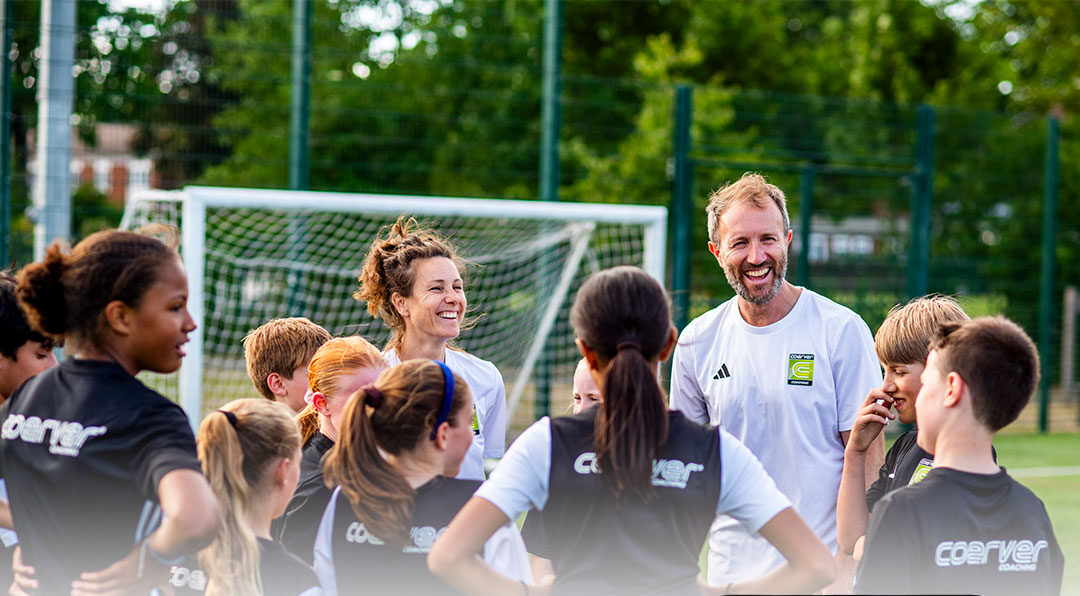
Coerver Coaching has always been built around one powerful idea: the quality of the team depends on the quality of the individual player. The method focuses on helping players become technically confident, creative, brave, and effective in game situations.
That is exactly what young players need if they want to move from potential to performance.
A player may be naturally talented, but talent has to be trained. The best young players need repeated contact with the ball, progressive challenges, 1v1 moves, first-touch work, receiving and passing exercises, finishing practice, speed changes, and small-sided game situations where skill becomes useful under pressure.
Coerver Coaching gives players and coaches a structure for that development.
1. Ball Mastery: The Foundation of Every Wonderkid
Every exciting young player starts with comfort on the ball.
Before a player can beat defenders, create chances, combine with teammates, or play with confidence under pressure, they need a close relationship with the ball. They need to manipulate it with both feet, use different surfaces of the foot, shift it quickly, stop it, start again, change direction, and move with balance.
That is why Ball Mastery is so important.
Coerver Coaching’s Ball Mastery program is designed to improve a player’s touch, control, weaker foot, and ability to use the ball more effectively in the game.
For a potential wonderkid, this is the base layer.
The player who looks calm in traffic is usually not calm by accident. They have repeated the movements. They have built coordination. They have trained both feet. They have learned how to keep the ball close enough to protect it but far enough to explode away.
Wonderkids often look like they have more time than everyone else. Ball mastery helps create that feeling.
2. 1v1 Moves: Learning How to Beat Players
A wonderkid often excites people because they can eliminate defenders.
They can drop a shoulder, change speed, disguise their intention, and create separation. This ability is not just about flair. It is a game-changing skill.
A player who can beat one defender can break pressure. A player who can beat one defender can create a 2v1. A player who can beat one defender can open space for a shot, cross, pass, or combination.
Coerver’s Moves product focuses on essential soccer skills for youth players and junior coaches, including attacking moves players can use to become more confident in 1v1 situations.
That matters because 1v1 ability gives young players courage.
The goal is not to teach tricks for tricks’ sake. The goal is to teach players how to use moves at the right time, in the right area, at the right speed. A move should have a purpose: escape pressure, unbalance a defender, create space, or attack goal.
A young player with 1v1 confidence becomes harder to defend. They also become more creative because they are not afraid of pressure.
3. First Touch and Receiving: Creating Time and Space
A wonderkid’s first touch often separates them from other players.
The best young players do not simply stop the ball. They receive the ball into their next action. They take their first touch away from pressure. They open their body. They scan before receiving. They control the tempo of the game before the defender can get close.
This is one of the biggest differences between a good young player and an elite young player.
Coerver training places major value on first touch, receiving, passing, movement, and small-group play because these are the skills that allow players to play quickly when the game gets crowded.
For coaches, this is a major teaching point. A player with a poor first touch is always fighting the ball. A player with a clean first touch can lift their head, make better decisions, and play faster.
Wonderkids are often described as having “composure.” But composure is easier when the first touch is clean.
4. Creativity in Tight Spaces
Many great young players are developed in tight spaces.
Futsal courts, small-sided games, crowded playgrounds, and technical training areas force players to solve problems quickly. There is less time, less space, and less room for lazy technique.
Coerver Coaching’s Coerver Futsal product is built around individual skills and small-group play in tight spaces, including 1v1 and 2v2 attacking and defending, change of pace, receiving and passing, first touch, finishing, and combinations.
That is exactly the kind of environment that helps players become sharper.
A wonderkid is not just a player who can dribble in open grass. The real test is whether they can keep the ball, create an angle, play a pass, or escape pressure when defenders are close.
Tight-space training forces players to think and act quickly.
5. Confidence and Mentality
The word wonderkid usually focuses on talent, but mentality is just as important.
Young players need confidence. They need courage. They need to keep demanding the ball after mistakes. They need to work at home. They need to enjoy the repetition that technical development requires.
This is another area where the Coerver approach is valuable. The First Skills product focuses on building soccer skills in beginner players and includes guidance that helps create fun, motivating practices for young players.
That is important for youth development.
The best coaches do not just run drills. They create an environment where players want to improve. They make repetition exciting. They give players confidence. They help players fall in love with the ball.
A potential wonderkid needs that kind of environment because pressure comes quickly. Praise the effort. Praise the bravery. Praise the player who tries the move. Praise the player who loses the ball and asks for it again.
6. Turning Individual Skill Into Game Impact
The final step is turning skill into performance.
A player may have good feet, but can they use those skills in the real game? Can they beat pressure, combine with teammates, create chances, finish attacks, and help the team?
That is where individual skill and small-group play come together.
The Coerver Total Touch Bundle combines Futsal, Ball Mastery, and Moves, giving players a more complete technical development package.
For players, this kind of training helps connect the pieces:
- Ball mastery gives control.
- Moves give creativity.
- Futsal-style training gives speed of thought.
- Small-sided play gives decision-making.
- Repetition gives confidence.
That is how young players begin to look different.
They do not just have talent. They have tools.
A Wonderkid Needs More Than Talent
Talent may get people watching.
Training keeps them watching.
A young player with natural ability still needs thousands of quality touches, repetition under pressure, and constant improvement in the core skills of the game.
The most exciting young players usually have a strong foundation in:
Ball Mastery
The player is comfortable manipulating the ball with both feet. They can move it quickly, protect it, change direction, and stay balanced under pressure.
1v1 Ability
The player has the confidence to beat defenders. This does not always mean tricks. It means timing, disguise, acceleration, and the courage to attack space.
First Touch
A wonderkid often separates from others with the first touch. They can receive the ball away from pressure, into space, or into their next action.
Game Awareness
Great young players scan. They know where pressure is coming from. They see teammates early. They understand when to dribble, pass, shoot, or protect the ball.
Mentality
A player with potential must love improvement. They must be coachable, brave, competitive, and resilient enough to make mistakes without hiding.
Coerver Coaching helps players develop these traits by organizing training around the building blocks of individual excellence: more touches, better control, attacking moves, changes of speed, receiving and passing, finishing, and small-group play.
The Mistake Parents and Coaches Make With Wonderkids
One of the biggest mistakes is treating a talented young player like they have already arrived.
A player may be the best on their team at age ten, twelve, or fourteen, but soccer development is not a straight line. Early success does not guarantee long-term success. The best young player today is not always the best player five years from now.
Coaches and parents should avoid building the player’s identity around being “the star.” Instead, build the player’s habits.
Praise the work. Praise the courage. Praise the training detail. Praise the willingness to try skills under pressure. Praise the player who responds well after losing the ball.
A true development environment does not just ask, “Is this player talented?”
It asks:
How can we help this player keep improving?
For coaches who want a broader training resource, the Ultimate Bundle is a strong Coerver training option for improving players and building more effective practices.
Wonderkid vs. Good Young Player
Not every good young player is a wonderkid.
A good young player may dominate because they are faster, stronger, or more physically mature. A wonderkid usually shows something deeper than physical advantage.
They show qualities that can transfer as the level gets higher.
For example:
- Can they solve problems when space disappears?
- Can they play quickly under pressure?
- Can they beat opponents with skill, not just speed?
- Can they make teammates better?
- Can they adapt when the game changes?
- Can they handle mistakes and keep demanding the ball?
That is where the real evaluation happens.
The question is not only, “Who is the best player right now?”
The better question is:
Whose game has the qualities to keep growing?
Every Young Player Should Train Like a Wonderkid
Most players will never be labeled a wonderkid by scouts, media, or professional clubs. That is fine.
The goal is not to chase a label.
The goal is to develop the skills that give a player a chance to reach their highest level.
Every young player can train the habits of a top talent:
- More touches on the ball
- More 1v1 practice
- More weak-foot work
- More receiving and turning
- More changes of speed
- More creativity
- More small-sided games
- More confidence under pressure
This is where real development happens.
A player does not become special by talking about potential. A player becomes special by training the details every day.
Start Building Wonderkid-Level Skills
For players who want to start building that foundation at home, begin with Ball Mastery. For players who want more 1v1 confidence, add Moves. For players and coaches who want a more complete technical package, the Coerver Total Touch Bundle brings together Ball Mastery, Moves, and Futsal-style training.
Final Thoughts: What Makes a Wonderkid?
A wonderkid in soccer is a young player with rare potential, advanced ability, and the possibility of becoming an elite player. But the word should never be used as a finish line.
It is only the beginning.
Across the world, there are countless young players who could fit the idea of a wonderkid. Some are already known. Many are still hidden. Some are in professional academies. Others are playing in local parks, small clubs, or pickup games with no cameras and no scouts watching.
The next great player could be anywhere.
The key is development.
Talent must be trained. Confidence must be protected. Skill must be sharpened. The player must keep learning how to use technique in the real game, against real pressure, at real speed.
That is why Coerver Coaching remains such a valuable model for youth players and coaches. It gives players a pathway: master the ball, learn the moves, improve the first touch, play creatively, solve problems, and keep growing.
Because the world may call a player a wonderkid.
But the player still has to do the work.
Recommended Coerver Player Products
For players and coaches who want to develop the traits mentioned in this article, these Play Great Soccer products are a natural fit:
Ball Mastery
For touch, control, weaker foot development, and confidence on the ball.
Moves
For 1v1 attacking skills and creative ways to beat defenders.
Coerver Total Touch Bundle
For a combined focus on Ball Mastery, Moves, and Futsal-style touch development.
Coerver Futsal
For tight-space skill, speed of thought, first touch, finishing, and small-group play.
First Skills
For beginner players and coaches who want fun, motivating practices that build strong technical habits.
Ultimate Bundle
For coaches who want a broader Coerver training resource to improve players and practices.
Suggested Internal Links