




Want to know how to shoot a soccer ball with power? The secret is technique first and strength second. A powerful shot comes from a good approach, a planted standing foot beside the ball, a locked ankle, contact with your laces through the middle of the ball, and a full follow-through that carries your body toward the target.
Big thigh muscles help, but they are not the main reason some players kick a soccer ball harder than others. Plenty of slim players hit the ball with real venom because they get the mechanics right. If you want a stronger kick, start by fixing how you strike the ball, then add exercises to build leg and core strength over time.
Why Shooting With Power Matters
There are moments in a game when you want to pass the ball into the back of the net, and there are moments when you need to strike it hard. A powerful shot from the edge of the box gives the goalkeeper less time to react, can beat a keeper who is slightly out of position, and forces rebounds that teammates can pounce on.
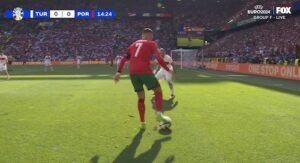
The best modern example is Cristiano Ronaldo. While at Manchester United, he scored a famous long-distance goal against Porto in the 2009 Champions League quarterfinal, hitting the ball from a reported 40 yards out. His power came from years of practicing the same striking technique you will learn below, combined with the strength he built over his career.
For younger players, the good news is that your legs get stronger naturally as you grow and play more soccer. If you learn the right technique now, your shot will keep getting harder as your body develops.
How to Shoot a Soccer Ball With Power: Step by Step
- Approach at a slight angle. Start a few steps back and come in at a small angle, not straight on. This lets your hips swing through more freely. Your last stride should be a little longer than the others.
- Plant your standing foot beside the ball. Place it roughly level with the ball and about a foot-width to the side, toes pointing at the target. Too far back and the ball flies high; too far forward and you smother the shot.
- Bring your kicking leg back. Bend your knee and swing from the hip. The backswing loads the power.
- Lock your ankle and point your toe. Toe down, ankle firm. A floppy ankle leaks power.
- Strike with your laces through the center. Contact the middle of the ball with the hard top of your foot. Hit it slightly above center to keep it low and on target.
- Keep your body over the ball. Lean forward slightly with your chest and knee over the ball. Leaning back sends the shot over the bar.
- Follow through and land on your kicking foot. Let your leg continue toward the target and land on the foot you shot with. That forward momentum adds power.
Use your arms and core
Your opposite arm should swing out for balance as you strike. Power transfers from the ground through your hips and core into your leg, so a strong, stable trunk matters as much as strong legs.
Common Mistakes
- Toe-poking the ball. Striking with the tip of the toe is unpredictable and can hurt. Use your laces.
- Leaning back. This is the main reason shots sail over the goal.
- Standing foot in the wrong spot. Most power and accuracy problems start here.
- Swinging only from the knee. Power comes from the hips. Use your whole leg.
- Trying to hit it as hard as possible every time. Clean contact at 80 percent effort usually beats a wild swing at 100 percent.
- Stopping the leg at contact. No follow-through means no power.
Practice Session: Power Shooting
This 40-minute session works for one player with a few balls and a goal or wall, or for a small group.
- Dynamic warm-up (8 minutes). Light jogging, leg swings front-to-back and side-to-side, walking lunges, and hip openers. Never practice power shooting cold.
- Technique strikes (8 minutes). From 10 yards, hit a stationary ball at a wall or goal at half pace, focusing only on plant foot, locked ankle, and landing on your kicking foot. 10 strikes with each foot.
- Distance strikes (8 minutes). Move back to 18 to 20 yards. Take two touches to set the ball, then strike with the laces. 8 shots per foot, resting between sets.
- Shooting off the dribble (8 minutes). Dribble at a cone, move the ball out of your feet with one touch, then shoot. This is how power shots happen in real games. 6 reps per foot.
- Strength finisher (8 minutes). Two to three rounds of bodyweight squats (10), walking lunges (10 each leg), glute bridges (12), and a 30-second plank. These exercises help you kick a soccer ball harder over time.
Exercises to kick a soccer ball harder
For youth players, bodyweight exercises such as squats, lunges, step-ups, glute bridges, and planks are enough. Add hip mobility work so you can swing freely. Older teens can add supervised strength training. Keep shooting volume sensible, since too many full-power strikes in one session can strain the hip and groin.
The Coerver Angle
At Coerver Coaching, we teach shooting as a skill built on a foundation of ball mastery. A player who can set the ball with one clean touch has time to plant correctly and strike with confidence. That is why our sessions link close control and 1v1 moves directly to finishing: beat a defender, create a yard of space, then hit the target. Power is the final layer on top of a good touch and good technique, not a replacement for them.
For more on striking, watch Steven Gerrard shooting in slow motion, study Diego Forlán’s long-range shooting technique, and see Cristiano Ronaldo’s long distance goal against Porto.
Frequently Asked Questions
How do you kick a soccer ball harder?
Plant your standing foot beside the ball, lock your ankle with your toe pointed down, strike through the center with your laces, keep your body over the ball, and follow through, landing on your kicking foot.
Do you need strong legs to shoot hard?
Strength helps, but technique matters more. A player with clean technique will usually out-shoot a stronger player with poor mechanics.
How can youth players improve kicking power?
Focus on technique, practice with both feet, and use bodyweight exercises like squats and lunges. Power grows naturally as young players get older and stronger.
Why do my powerful shots go over the bar?
Usually because you are leaning back or striking below the center of the ball. Keep your chest over the ball and make contact through the middle.